
Nov 3, 2026
Read in: English (United Kingdom)
Parked Domains Inflate UK Tech Stack Counts in Company Lists
Parked domains inflate UK tech stack counts by tricking automated scanners into recording registrar templates as enterprise software. This corruption misleads sales teams and distorts market research. You can fix these errors by inspecting nameserver records and verifying active business identity before you build your prospect lists.

Your database shows a British manufacturing firm running enterprise analytics, modern cloud hosting, and an advanced content management system. You open the website and discover a registrar holding screen filled with third-party pay-per-click links. Automated scanners read placeholder scripts as active commercial software, which corrupts your market segmentation and wastes outbound effort. You can prevent these false signals by running structured checks before raw domain records reach your revenue team.
What Parked and Holding Domains Do to UK Firm Records
Parked domains are registered web addresses that lack original content or an active commercial audience, displaying default registrar templates, advertisement blocks, or sale notices instead.[2] Automated web crawlers regularly inspect these addresses and record standard registrar scripts as genuine operational software choices. Sales operations teams suffer when these placeholder scripts inflate tech stack counts across target accounts, because unverified technical tags obscure the actual impact of excess software in customer records. Every flawed data point reduces outbound efficiency.
Corporate registries in Great Britain link statutory business profiles to domain names through public filings, digital signatures, and automated directory scrapers. Registrar holding environments often serve commercial ad networks, where just three major parking services manage 60% of millions of monetized holding domains.[1] Web scrapers collect these monetization frameworks and incorrectly assign advanced web technologies to inactive shell firms or dormant corporate entities. These systemic errors distort regional technographic benchmarks completely.
How False Technology Signals Enter Prospect Lists
Default server configurations emit complex technical fingerprints during automated page requests. Domain registrars install standardized parking software containing third-party tracking tags, content delivery networks, and script libraries to monetize idle web traffic. Automated data scrapers scan these holding templates and log enterprise software deployments for businesses that possess no live commercial website.
Shared hosting providers configure identical parking templates for thousands of freshly registered British web addresses. Automated scanners treat these basic infrastructure references as active business tools, which distorts observable web intelligence across regional market studies.
Monetized holding pages rely heavily on automated advertisement syndicators to generate revenue from stray web visitors. Four advertising syndicators control roughly 90% of all monetized parked websites across the global internet.[1] Discovery scanners record these complex advertisement scripts as dedicated marketing automation systems, which adds fictitious software platforms to basic business directories.
Evidence Checks for a Company Domain Audit
A rigorous company domain audit inspects HTTP status codes, redirect paths, nameserver records, and page copy to validate active business operations. Teams that identify software buying signals cross-reference live server responses with active corporate registry data to confirm organizational authenticity. Automated scanners that evaluate only superficial meta tags mistake generic holding screens for modern corporate software deployments.
Security standards provide another clear verification layer, because DNS records and commercial email traffic operate on separate protocols. Public bodies implement null MX records and strict sender policies to secure dormant web properties against spoofing attacks.[3] Evaluating these DNS configurations alongside live page text establishes high confidence and confirms whether a web property represents an active British trading company.
Where Inflated Tech Counts Change Sales Targeting
Inaccurate software counts damage account segmentation by moving inactive entities into high-value sales tiers. Revenue teams route accounts based on detected software stacks, assigning dedicated account managers to firms tagged with modern customer portals or marketing automation platforms. A dormant holding page displaying generic tracking tags misdirects senior sales representatives toward empty shell companies.
Market analysts also miscalculate total addressable software adoption when raw scanner data populates industry reports. Automated lists group holding pages with enterprise software users, skewing regional adoption rates for digital platforms across British trading hubs. Commercial teams waste prospecting budgets when unverified records corrupt their campaign filters and inflate prospective deal counts.
Lookalike Domains and Inflated UK Tech Stack Counts
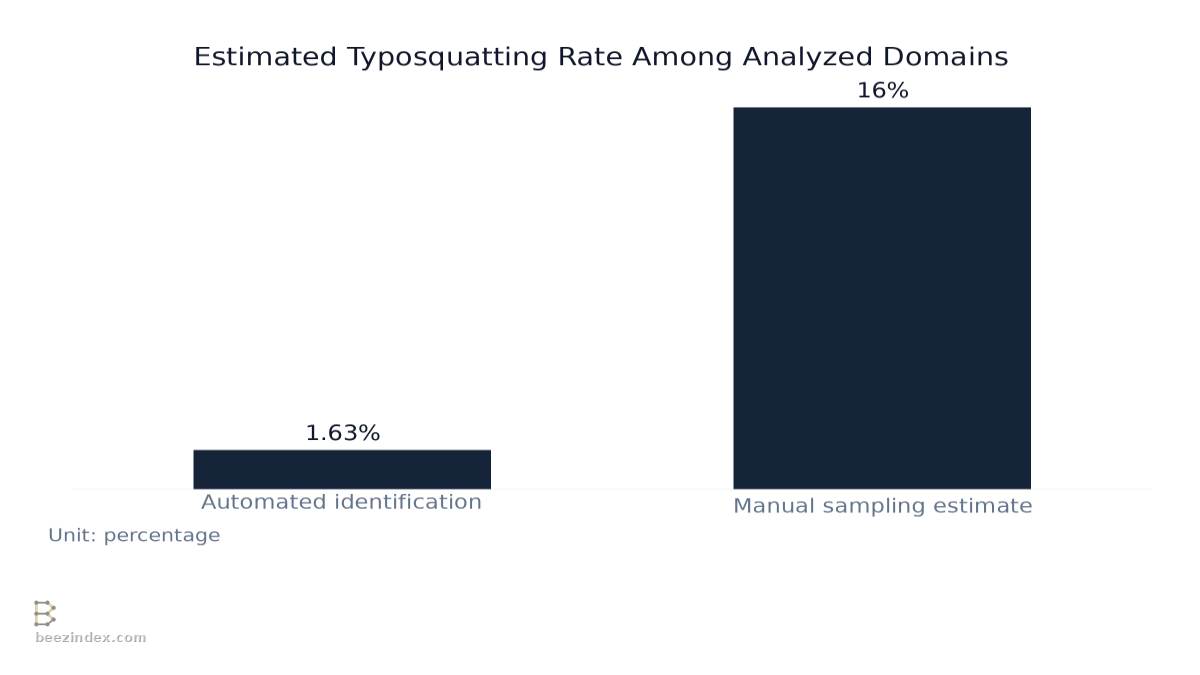
Lookalike domains and typosquatting web addresses corrupt British commercial registers by capturing traffic intended for recognized operating businesses. Industry research tracks digital platform usage statistics and reveals that automated identification catches typosquatting on approximately 1.63% of 8 million domains, though manual sampling suggests the actual rate is closer to 16%.[1] Scanners that scrape these defensive registrations record generic parking software instead of real operational tooling.
Defensive registrations rarely host live customer applications, but brand protection teams retain them to prevent phishing attempts against customers. These holding records frequently link back to statutory business directories through corporate filing records. Without careful parked domain detection, commercial data platforms attribute placeholder parking scripts to the parent brand, which falsifies the company's real technology footprint.
Estimated Typosquatting Rate Among Analyzed Domains
A Practical Cleanup Checklist for Prospect Lists
Systematic prospect list cleanup starts by evaluating page copy for placeholder terms like domain for sale or under construction. Live operating businesses maintain unique text, customer terms, and physical trading addresses on their websites. Holding domains display generic registrar templates that repeat across thousands of unrelated web addresses.
Review teams must inspect the final destination of all automated redirect chains before exporting company data. Holding assets often employ pay-per-redirect strategies, which transfer web traffic through ad networks rather than legitimate brand hubs.[1] Unchecked redirects assign the technology stack of an external advertising platform to a totally unrelated British firm.
Technical teams check mail exchange records and live contact pages before approving records for commercial outreach. This process ensures research teams drop unverified domains before sending corrupted software counts to downstream commercial applications.
Keeping Domain Audits Fresh After Cleanup
Domain records change constantly as businesses purchase new addresses, update server infrastructure, or allow old web registrations to lapse. Industry classification systems re-evaluate 300,000 domains daily to maintain accurate status records across shifting online assets.[2] Organizations that analyze corporate digital footprints schedule continuous audits to verify that active accounts have not reverted to placeholder hosting pages.
Data hygiene protocols record explicit timestamps and technical reasons whenever analysts approve or discard a specific domain. Fresh evidence and freshness indicators ensure teams detect meaningful changes, such as a dormant project converting into a fully functioning transactional website. Continuous monitoring protocols keep research moving without polluting sales records with obsolete technology profiles.
Putting Verified Company Intelligence Into the Workflow
To resolve these data quality issues, modern research workflows combine company registry data with live web observations. This approach eliminates placeholder profiles while grounding domain data in statutory company identity to protect sales teams from targeting defunct legal entities.
Prospecting platforms deliver reliable context by evaluating live site structure rather than surface tags alone. The BeezIndex platform applies multi-signal verification to connect registered British companies with verified websites. Sales leaders who build account lists on verified corporate signals eliminate phantom software records from their pipeline.
Researchers start with a free search on public directories to review initial firm profiles and test technical filters, ensuring structured software intelligence allows commercial teams to spend their time speaking with genuine operational companies.
What to Remember
Parked and holding domains undermine B2B pipeline quality by introducing phantom software signals into corporate databases. Automated tools frequently misread standard registrar scripts, ad networks, and hosting templates as enterprise applications. With over 500,000 parked domains tracked in major web classification indexes, unchecked datasets distort software counts and waste valuable sales time.[2]
Commercial teams must establish clear evidence checks, inspect redirect chains, and verify statutory business identity before exporting target accounts. Establish a regular cleanup routine that tests nameserver profiles and page content freshness on all UK company records. Combining verified company identity with active web inspection ensures your sales pipeline contains only real trading firms.
Frequently Asked Questions
How do parked domains create false tech stack counts?
Domain registrars install generic parking templates that contain advertising scripts, content delivery networks, and tracking tags. Automated crawlers scan these placeholder pages and log the registrar's technical infrastructure as the company's own software. This causes data enrichment systems to assign advanced web technologies to inactive businesses.
Does an HTTP redirect always indicate a parked domain?
An HTTP redirect does not always mean a domain is parked or abandoned. Many active trading companies redirect secondary brand names, regional domains, or common misspellings to their primary commercial website. Data audits must check the final destination URL to confirm whether it leads to a genuine trading platform or a third-party ad portal.
How often should teams recheck prospect domains for changes?
Commercial teams should audit web addresses at least once every 90 days. Domain status is fluid because companies let web properties expire or launch new websites on previously dormant addresses. High-turnover databases update domain records daily to account for the hundreds of thousands of status changes happening across the web.
Can a domain show a parking page while still handling email?
Web hosting and mail exchange operate on completely independent DNS records. A business can run an active Google Workspace or Microsoft 365 email system while pointing its root web address to an undeveloped registrar page. Verifying active mail exchange records helps teams separate active businesses with basic websites from completely abandoned domains.
What is the fastest way to spot monetized holding pages?
The quickest method involves checking the domain nameservers and inspecting the page for generic pay-per-click ad blocks. Major parking services like Sedo and CashParking control over 60% of monetized holding domains. Filtering out these known nameserver hosts removes the majority of false technology signals before running deep technographic scans.
Start with a free search to explore verified British company profiles, then upgrade your account to monitor active domains and eliminate false software signals.
Clean Your UK Tech Stack Data Today