
Oct 26, 2026
Read in: English (United Kingdom)
The 64% CMS Adoption Statistic That Breaks UK SME Prospect Filters
Global reports claim 64% content management system adoption, but this figure misleads UK sales teams. Automated scanners often fail to identify platforms on small business sites due to custom code and obfuscation. Revenue teams improve pipeline accuracy by cross-referencing live HTTP signals with official Companies House registry records.

B2B growth teams burn valuable outreach budgets when they rely on broad technical benchmarks to target smaller British firms. While macro studies claim roughly two thirds of the web runs on identifiable content platforms, real verification across corporate registries tells an entirely different story. You will discover why headline market averages generate broken sales pipelines and how observable technical records restore pipeline precision. Modern prospecting requires deep contextual validation.
Why Global CMS Statistics Mislead Outreach
Global market estimates indicate that content management system adoption sits at roughly 64%, but this broad number misleads teams who target regional enterprises. International aggregates combine consumer blogs, personal projects, and sprawling enterprise networks into one single metric, which obscures how trading commercial entities actually build their online stores. Sales teams filter UK businesses by CMS relying on these inflated figures, only to find that up to a third of their outreach addresses bounce or land on completely irrelevant accounts.
Smaller British firms often rely on custom code, localized site builders, or agency architectures that hide standard platform markers from basic scrapers. Technical research reveals that website code decay degrades contact and platform data by 20% to 25% annually, worsening targeting errors for outdated databases.[1] Sales workflows waste hours chasing ghost accounts because automated platform detection checks frequently confuse lightweight commercial landing pages with full corporate installations.
Technical Reasons Automated Platform Scanners Fail
Automated scanners misread modern platforms because script obfuscation and reverse proxies strip out identifiable metadata tags. Firewalls block generic scrapers before they locate CMS footprint signatures. Over 40% of small trading sites conceal their primary engine behind customized scripts. These hidden configurations routinely bypass traditional discovery frameworks.
Manual checks through browser developer tools reveal that older plugins conflict with detection algorithms and return false positives. Market intelligence tools often mark an active trading site as a static HTML page when custom cache layers hide common path headers. These technical oversights lead growth teams to misclassify legitimate prospects or eliminate qualified accounts from pipeline campaigns.
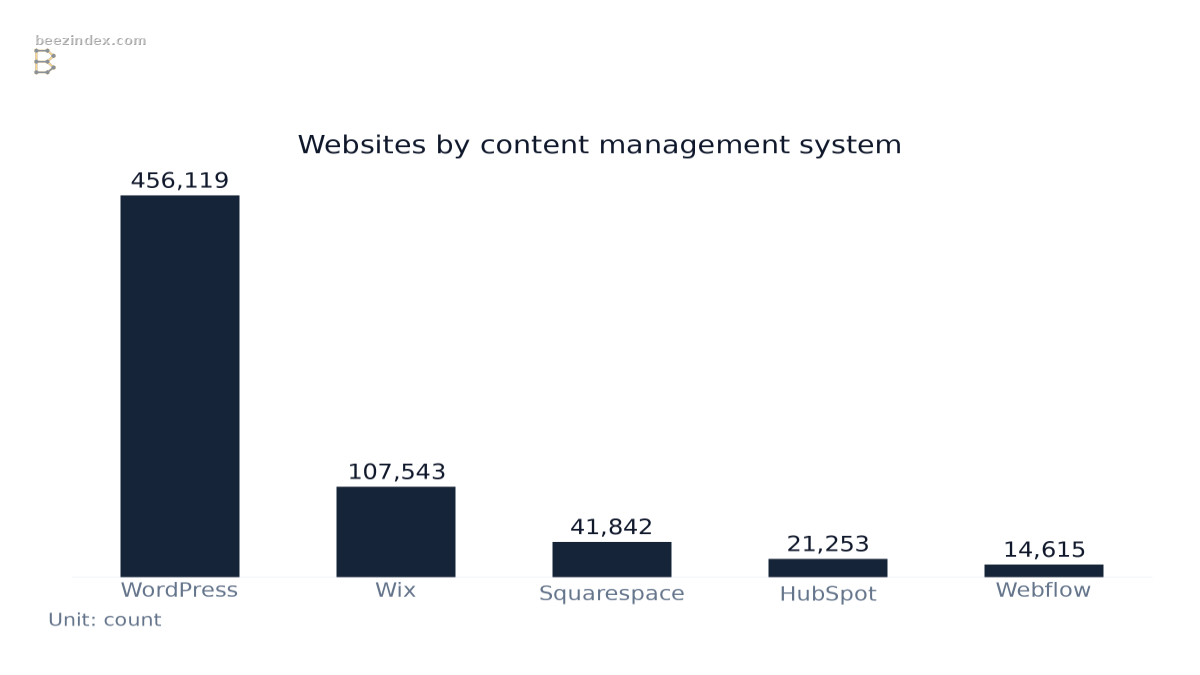
Actual system usage across British registered businesses confirms that platform market share concentrates heavily among a few dominant vendors. The verified values are WordPress: 456119; Wix: 107543; Squarespace: 41842; HubSpot: 21253; Webflow: 14615. These audited installation figures provide a reliable operational baseline for qualifying accounts across regional sectors.
For instance, a local e-commerce site might use a custom React frontend that obscures its underlying Shopify backend, causing basic scanners to report a 'custom' platform rather than the actual commercial engine.
Websites by content management system
Combining Page Evidence With Corporate Records
Connecting page-level source code with Companies House registry filings creates high confidence during B2B prospecting. While macro industry surveys claim that standard platforms power between 68.5% and 71.3% of the modern web, raw technical tags alone do not prove commercial buying power.[2] Relying on these broad percentages before verifying specific site evidence often introduces costly pipeline mistakes.
Sales teams achieve superior targeting accuracy when reviewing lead enrichment tools that pair live web scripts with verified corporate balance sheets. Public availability of operational data does not grant blanket authorization to process personal email addresses under UK GDPR and PECR rules. Commercial data teams must establish legitimate interest assessments and confirm corporate subscriber status before running platform-targeted outbound campaigns. Compliance ensures sustainable growth.
Estimated Percentage of Websites Using a CMS

Integrating Live Web Intelligence Into Pipelines
Automating technical verification ensures that sales teams act on genuine operational shifts rather than historic data points. Specialized technology checkers monitor HTTP response headers, JavaScript libraries, and DNS records to capture software upgrades in real time.[3] Stale technographic profiles cause marketing teams to send misaligned pitches to accounts that changed their core infrastructure months ago.
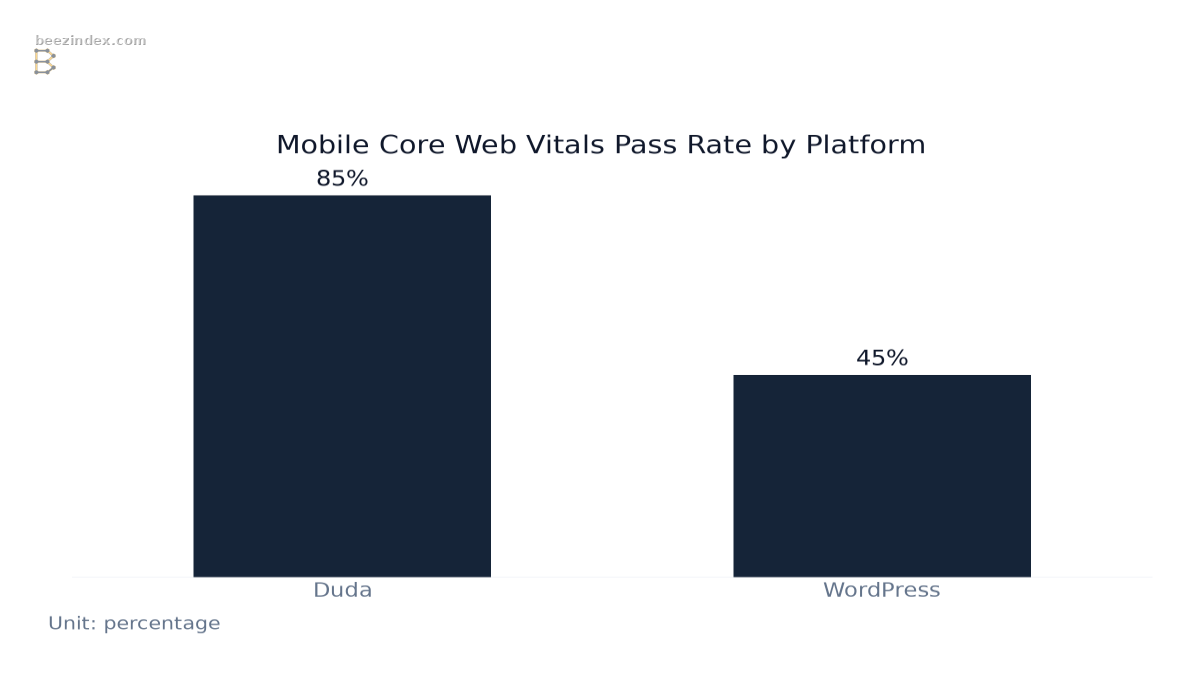
Platform performance metrics offer direct insight into whether an online merchant requires immediate technical remediation. Duda leads mobile Core Web Vitals with an 85% pass rate, while WordPress ranks lowest among major platforms at 45%. Tracking live mobile score thresholds alongside stack deployments allows digital agencies to pitch web development services directly to high-margin accounts suffering from severe performance bottlenecks.
Validating Web Signals With Firmographic Intelligence
Firmographic records validate technical signals by confirming whether a domain belongs to a trading limited entity or an unregistered side project. Software sellers find that Shopify Plus deployments typically represent merchants generating over $1M to $3M in gross merchandise value, making them prime enterprise accounts. Basic scrapers often mistake standard retail themes for high-tier enterprise infrastructure, producing invalid sales targets.
Researchers analyze corporate digital footprints to detect active hiring signals and operational changes before statutory accounts show growth. Technical stack shifts indicate immediate purchasing intent for integrations and support services.[3] Unverified platform signals lead sales reps to pitch expensive software solutions to dormant businesses.
Direct marketing in the UK requires strict separation between corporate subscribers like limited companies and individual subscribers like sole traders. Unincorporated partnerships hold individual subscriber rights under PECR and require explicit prior opt-in consent for electronic outreach. Compliance teams reduce regulatory exposure by auditing corporate registrations before deploying software-triggered marketing campaigns.
Mobile Core Web Vitals Pass Rate by Platform
The Future of Evidence-Based Prospect Verification
As the technical landscape evolves, traditional detection methods require updates to remain effective.
Modern digital architecture moves rapidly toward headless systems and API-first content repositories, breaking single-signature detection tools. Headless adoption expands at a compound annual growth rate of over 20%, which separates front-end display code entirely from the back-end content engine.[2] Commercial prospectors who rely on surface-level generator tags fail to locate these modern corporate accounts.
Commercial researchers track uk business technology usage patterns to understand how geographic and industrial factors shape software buying decisions across Britain. Sales pipelines maintain high conversion rates when teams pair evidence and freshness indicators with live public page evidence. Verifying live technical assets protects outbound teams from algorithmic scraping errors and regulatory non-compliance.
What to Remember
Global averages that state 64% of websites run on an identifiable content platform lead UK sales teams into costly pipeline failures. Actual market distribution shows WordPress accounting for 456119 verified UK deployments, followed by Wix with 107543 and Squarespace with 41842. Outreach teams that filter targets using raw, single-point scraping checks suffer from high bounce rates and misaligned messaging.
Revenue operations leaders must build their pipeline filters by cross-referencing live HTTP signals with official Companies House corporate data. Begin your next prospecting sprint by auditing legal subscriber statuses under PECR and validating script freshness before loading technical leads into outbound automation sequences. Thorough verification safeguards overall campaign performance.
Frequently Asked Questions
Why do global CMS market share numbers fail for UK prospecting?
Global statistics aggregate millions of international blogs, non-commercial sites, and parked domains that do not represent active British commercial enterprises. Validated UK company records show distinct adoption distributions that require localized verification.
How often does website technology data decay across business lists?
Contact and technographic records degrade at a rate of 20% to 25% each year as firms migrate hosts, change frameworks, and close down operations. Teams must refresh their technical signals on regular quarterly cycles to maintain high outbound deliverability.
What legal rules apply when emailing UK businesses based on tech stack data?
Outreach must comply with both UK GDPR and the Privacy and Electronic Communications Regulations 2003. Direct marketing to corporate subscribers like limited companies does not require prior consent, but individual subscribers like sole traders require explicit opt-in consent.
Start with a free search to explore verified company data, then access advanced monitoring features to track real stack changes across British businesses.
Build Verified UK Prospect Lists TodayReferences
- B2B Prospecting Tools
- Cms Market Share Statistics
- Best Free Website Technology Checker Tools 2026
- CMS Market Share 2026: 80+ Statistics, Trends & Data - Colorlib
- CMS Market Size, Share, Trends & Industry Growth Research Report, 2031
Modern revenue teams eliminate data inaccuracies by using platforms that prioritize observable web intelligence instead of unverified global scraped lists. BeezIndex delivers verified company-to-website intelligence by validating live frontend code against official UK corporate entity structures. Targeted personalized outreach yields 15% to 25% reply rates when campaigns connect to real software installations rather than outdated contact directories.[1]
Growth teams define ideal customer profiles by combining operational technology filters with legal entity filings and employee headcount thresholds. Revenue operations leaders test technical queries with basic searches to evaluate corporate profiles, then add advanced monitoring features to track meaningful changes across trading stacks. This verification layer protects pipeline efficiency and keeps research moving without operational delays.