
Nov 20, 2026
Headless CMS Growth Claims Do Not Match UK SME Websites
Global reports claim high headless CMS adoption, but UK SME data shows monolithic platforms still dominate the market. Automated scanners often misidentify decoupled builds by missing API calls and static asset patterns. Use precise network inspection and verified registry data to identify genuine composable architectures and improve your sales outreach accuracy.

Industry surveys suggest that up to 73% of organizations may utilize headless architecture in some form, yet real audits show traditional monolithic platforms running most British businesses.
Headless CMS Adoption Realities
Headless CMS adoption separates the content creation repository from the presentation layer using application programming interfaces. Marketing departments often search for modern solutions when expanding their multi-channel delivery. Teams can locate uk company websites to inspect how different mid-market firms handle modern publishing workflows without unnecessary operational bloat. Careful evaluation helps teams understand market trends.
Composable website builds integrate independent cloud components for data storage, web design, and edge hosting. Industry analysts report potential commercial returns from these modern digital setups, though actual outcomes vary by implementation scale. Some studies suggest three-year ROIs for headless vendors ranging from 295% to 582%.[1]
Reported Three-Year ROI Range for Headless Vendors

Survey Figures Versus Observable Reality
However, traditional monolithic systems continue to dominate general web infrastructure and, as of October 2026, powered approximately 39.6% of all websites globally.
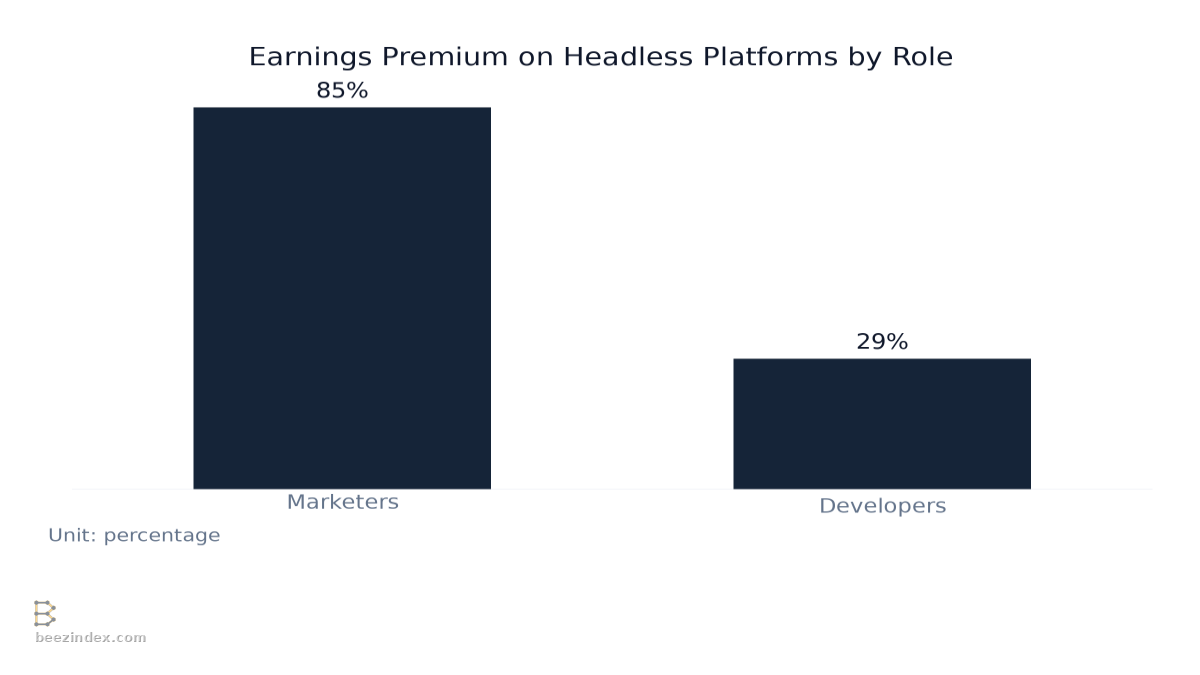
Specifically, marketers on headless platforms may in some cases earn more than those on legacy systems, while developers can see similar compensation increases.
Earnings Premium on Headless Platforms by Role
Why Scanners Miss Decoupled Architectures
Automated scanners identify website platforms by inspecting public HyperText Markup Language headers and client scripts. Decoupled platforms serve static files from edge networks, which strips traditional platform footprints completely. Teams preparing systems for shoppers often introduce headless storefronts that conceal the underlying operational database behind static assets. Digital storefronts require specialized monitoring tools.
Standard scanners frequently report custom builds or generic content delivery networks when encountering decoupled systems. Legacy tracking scripts left in production code can also generate false positive detections for abandoned tools. Technographic intelligence produces reliable market segmentation only when researchers combine public code markers with firmographic filters and verified registries to maintain data quality.
Technical Markers of Composable Builds
Composable setups leave specific fingerprints across public network requests and client code libraries. Modern static site generators inject distinctive asset bundles into the primary document object model during build routines to optimize performance.
Static site generators like Astro use islands architecture to isolate dynamic components. Headless implementations often require higher technical expertise and increased investment in maintenance compared to traditional CMS.[2] Agency estimates for headless projects can vary widely, often spanning from $10,000 to over $80,000 depending on scope.
Application programming interface calls to third-party content repositories reveal active headless operations behind static fronts. Network inspection tools capture these background requests during user interactions on content-heavy pages to verify architecture.
Evidence and Freshness Indicators
Freshness indicators verify whether a technical signal reflects active software or abandoned code. Engineering teams frequently deploy redesigns while leaving dormant tracking scripts inside the production document head. Technical analysts verify active software by uncovering hidden company infrastructure across secondary subdomains and network asset routes.
Active headless deployments show continuous updates across public edge delivery paths and static bundle hashes. Stale platforms retain frozen metadata tags and outdated server response headers across multi-year operational cycles without modification.
Automated verification workflows inspect request headers, DNS routes, and dynamic content endpoints simultaneously. Rigorous detection systems minimize false positives by cross-referencing public script fingerprints with current server behavior. Poor data hygiene leads to wasted outreach budgets when targeting inactive technology stacks.
Business Intelligence and CMS Distribution
BeezIndex combines technographic filtering with verified British corporate registry data to map actual website stacks accurately. BuiltWith tracks approximately 492 million domains and over 126,000 web technologies worldwide. Global scrapers often miss localized UK SME context because they prioritize crawl volume over verified corporate identity. Local market analysis requires precise regional data sources.
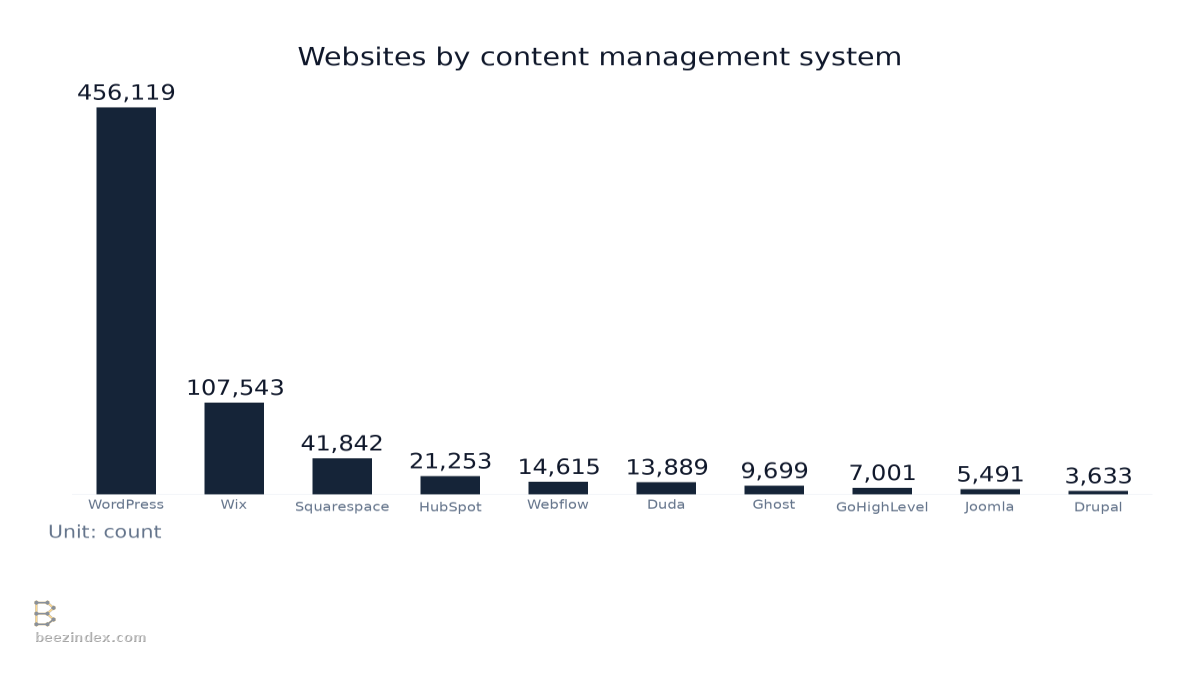
Verified platform distributions confirm that classic monolithic platforms continue to anchor the British small business community. The verified values are WordPress: 456119; Wix: 107543; Squarespace: 41842; HubSpot: 21253; Webflow: 14615; Duda: 13889; Ghost: 9699; GoHighLevel: 7001; Joomla: 5491; Drupal: 3633. Users can start with a free search to explore company data and upgrade later for advanced market tracking capabilities.
Websites by content management system
Auditing Composable Builds Without Overcounting
Auditing technical architecture requires strict matching criteria to prevent misclassifying standard websites as composable systems. Analysts evaluate review badges to interpret customer trust signals while examining the underlying commercial technology stack. Public customer proof widgets often run alongside traditional content systems without indicating a decoupled architecture.
Precise classification models separate fully decoupled architectures from monolithic setups using headless plugins. Migration teams often discover that rebuilding content models presents a far greater operational hurdle than porting existing data. Sales researchers improve conversion rates when they pitch relevant migration services only to businesses with genuine multi-channel infrastructure needs.
What to Remember
Sales representatives often spend approximately 39% of their week selling and researching prospects, so working with clean technographic data helps protect valuable sales capacity.
Audit public network requests, content delivery endpoints, and static asset bundles to verify active composable architectures before planning technical outreach. Teams conducting direct marketing across the UK should complete a Legitimate Interest Assessment under GDPR and maintain an opt-out mechanism to comply with PECR rules. Focus your market research on verified software footprints to build credible campaigns that address real business requirements.
Frequently Asked Questions
Why do global industry reports show such high headless CMS adoption?
Global industry reports frequently survey large software enterprises and funded venture startups rather than average commercial firms. Enterprise respondents deploy decoupled architectures across internal customer portals and mobile applications even when running traditional corporate blogs. The broader SME market continues to rely heavily on monolithic systems for simple administration and predictable overhead.
How do standard web scanners misidentify headless website platforms?
Decoupled web platforms generate flat static HTML files and host them directly on global content delivery networks. Automated scanners search for identifiable backend directory patterns, script hooks, and standard meta generator tags that headless builds deliberately omit. Scanners also register false positives when developers leave legacy monolithic tracking scripts inside updated static templates.
What technical indicators confirm a genuine composable build?
Analysts verify composable builds by monitoring client-side API requests to external content databases like Sanity or Contentful. The frontend architecture typically reveals modern build output structures from static site generators such as Astro, Next.js, or Gatsby. Active CNAME configurations pointing directly to specialized edge platforms like Vercel or Netlify provide secondary confirmation.
Start a free search on BeezIndex to inspect verified company technology footprints and upgrade your account to monitor live platform changes.
Verify UK Website Stacks Today