
Nov 18, 2026
Feefo, Trustpilot or G2 Badges Point to a UK Firm's Buyers
Review badges provide observable web intelligence that separates B2B software vendors from B2C retail stores. Companies use G2 and Capterra to target enterprise procurement committees, while consumer brands rely on Feefo and Reviews.io to drive checkout conversions. Analysts track these specific digital markers to classify buyer types and improve sales research accuracy.

Sales reps waste 17% of their working hours researching prospects and manually qualifying business targets. Public trust badges and review widgets provide observable web intelligence that can help separate business vendors from consumer stores. You can examine these digital markers on any UK corporate website to classify buyer types and keep research moving forward.
Review Badges Reveal Core Customer Segments
Review badges display public trust signals that immediately separate corporate software vendors from high-street ecommerce stores. Marketing teams add specific third-party widgets to convert their target audiences, giving analysts reliable observable web intelligence about underlying business models. Teams assessing agency client retention often look for verified partner links, but customer review embeds provide faster proof of daily commercial focus.
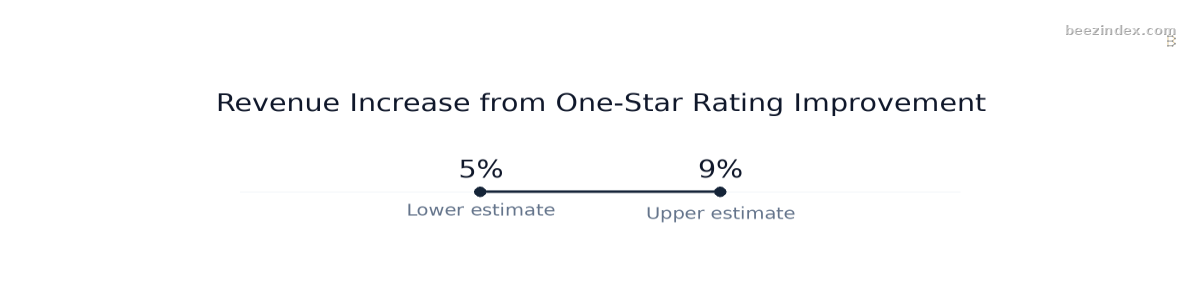
Consumer stores rely on verified checkout ratings to build instant buyer confidence on high-volume product pages. Commercial research suggests that a one-star improvement in average rating can correlate with a 5-9% revenue increase for these retail merchants.[2] Sales teams use these financial stakes to confirm whether a business serves individual shoppers or corporate procurement departments.
Revenue Increase from One-Star Rating Improvement
B2B and B2C Review Platform Differences
Enterprise buying committees operate through consultative evaluations that involve six to ten distinct corporate stakeholders.[1] Software buyers consult specialised directories like G2 and Capterra to compare feature matrices, contract terms, and user adoption rates. Vendors display quarterly awards from these directories on homepage navigation bars and pricing tables to convince procurement leads.
Retail shoppers make fast purchasing choices based on immediate delivery feedback and item quality scores. Consumer merchants deploy Feefo widgets and Reviews.io elements directly on checkout funnels to resolve immediate buyer hesitation. These distinct deployment patterns may indicate that technical review integration mirrors the commercial reality of the target transaction.
Review Platform Profiles and Placements
| Platform | Target Audience | Primary Focus | Badge Location |
|---|---|---|---|
| G2 | Corporate procurement teams | B2B software features | Homepage and pricing |
| Capterra | SME department managers | Business application comparison | Landing page headers |
| Feefo | Individual online shoppers | Verified merchant transactions | Checkout footer bars |
| Reviews.io | Retail ecommerce consumers | Physical product delivery | Product detail pages |
| Trustpilot | Mixed commercial audiences | General company reputation | Site-wide global footers |
| TrustRadius | Enterprise technology leaders | In-depth software evaluations | Enterprise resource hubs |
G2 Badge Detection Across UK Sites
Automated tools track corporate software validation badges to separate digital vendors from standard retail businesses across the United Kingdom. G2 and its acquired platforms account for approximately 55-58% of global software-review visibility across business categories. Analysts identify uk retail return platforms by checking reverse logistics scripts, but G2 badges confirm consultative corporate sales models.
Securing recognition on major business directories requires verified customer participation and active commercial vendor subscriptions. Products must collect a minimum of 10 reviews before qualifying for inclusion on a quarterly G2 Grid report. Finding these badges in site scripts may give researchers an indication that a company targets professional business buyers.
Software Review Visibility Share

Identifying Consumer Review Widgets Online
Consumer store templates feature interactive widgets that present direct feedback from verified private purchasers on high-traffic shopping pages. Merchants install closed systems like Feefo because invitation-only requests prevent competitors from submitting fraudulent negative feedback. Research teams facing barriers to unified datasets often struggle with manual audits, but identifying review scripts speeds up account classification.
Physical retail brands connect review systems directly to ecommerce engines like Shopify, Adobe Commerce, and WooCommerce. Products showing 11-30 verified customer reviews may see a 68% increase in conversion rates compared to unreviewed alternatives. Detecting these high-frequency customer widgets may indicate that a UK company relies on high-volume consumer transactions.
Classifying Complex Hybrid Commercial Models
Hybrid UK enterprises run commercial supply operations alongside dedicated retail stores on unified web domains. Telecommunications providers and hardware manufacturers sell corporate contracts to IT managers while shipping individual consumer products. These diverse companies divide their web architecture into separate buyer portals to serve both commercial customer segments.
Auditors spot hybrid models when enterprise pricing tabs sit beside standard retail checkout carts on navigation menus. Market researchers must classify individual subdomains or product lines separately rather than assigning one rigid label to the brand. Misclassifying these commercial models leads to misaligned sales messaging and wasted marketing resources across business development teams.[1]
Technical teams place G2 badges on professional software portals and Feefo widgets on direct retail storefronts. This intentional split is why prospectors may choose to check specific landing page scripts rather than inspecting only the root domain. Analyzing these separate web properties gives data teams evidence and freshness indicators for account scoring.
Filtering Accounts with Platform Signals
Commercial data systems track observable website markers to help sales teams qualify UK business records without manual browsing. Teams link fragmented company datasets to unify Companies House filings with live digital footprint indicators across every prospect account.
Revenue operations professionals combine firmographic records with verified company-to-website intelligence to confirm actual operational models before launching outreach. Sales representatives spend 30% of an average week selling, while administrative research consumes valuable time. Automated review platform detection can reduce guesswork and direct sales staff toward verified commercial buyers.
Modern prospecting workflows evaluate public website technologies as a business-level intelligence layer within qualification models. Teams that align their go-to-market motions with verified buyer types may close deals 67% more often than misaligned competitors.[1] Systematic filtering protects sales capacity and keeps outreach teams focused on realistic commercial targets.
Automated Review Signal Prospecting Workflows
To scale these insights, analysts often move beyond manual inspection to automated discovery platforms.
Technographic search engines scan millions of corporate pages to map installed tracking scripts and embedded trust assets. Researchers inspect page code directly to observe Feefo widgets, Trustpilot carousels, and G2 recognition banners on corporate domains.
BeezIndex simplifies this prospecting process by aggregating digital website footprints into searchable company intelligence profiles for UK business analysts. Users apply automated filters to isolate enterprise SaaS suppliers from retail consumer shops across specific British regions. This structured classification allows revenue teams to understand your market and prioritize high-value enterprise accounts.
Teams validate these automated classifications against standard business directories to preserve data hygiene and maintain regulatory compliance. British data protection rules under the Information Commissioner's Office require a clear lawful basis when processing corporate contact details. Verifying operational commercial models through public website indicators ensures relevant and compliant business-to-business communications.
What to Remember
Third-party review badges provide public signals regarding whether a UK company serves corporate clients or individual retail consumers across the market. Software vendors deploy G2 and Capterra awards to reassure consultative procurement committees, whereas ecommerce shops embed Feefo and Reviews.io widgets to drive quick cart checkout conversions. Tracking these distinct website embeds creates technographic intelligence that can reduce manual account research time across commercial sales teams.
Revenue teams should audit their existing prospect databases against visible website review signals before launching outbound business development campaigns. Checking whether an account displays B2B software accolades or consumer retail widgets prevents misdirected sales messaging and protects marketing spend. Combining observable web indicators with firmographic records ensures that your commercial pipeline targets verified buyers with appropriate contract values.
Frequently Asked Questions
Why do B2B websites prefer G2 over Trustpilot?
B2B buyers evaluate complex feature sets, software integrations, and service terms rather than simple parcel delivery speed. G2 provides deep technical grid comparisons tailored to multi-stakeholder corporate procurement groups. Consumer review platforms lack the structured software taxonomy required to validate business application performance.
How much does it cost a business to display a G2 badge?
Vendors can collect user reviews for free, but displaying official marketing badges requires a paid subscription. Commercial plans for badge licensing start at approximately $3,000 per year. Companies invest in these licenses because verified third-party recognition reassures enterprise risk committees during procurement.
Can consumer retail brands use G2 badges on their stores?
Consumer retail brands cannot use G2 badges because the directory categorises business software and professional services exclusively. Physical goods retailers turn to consumer rating systems like Feefo, Reviews.io, or Trustpilot to collect product feedback. Seeing a G2 badge may indicate that the business sells software or technical services to corporate users.
What signals reveal that a company operates both B2B and B2C channels?
Hybrid firms maintain separate sections on their website, such as a trade portal alongside a direct retail store. These companies frequently display consumer badges like Feefo in the checkout footer and G2 awards on their wholesale page. Inspecting subdomains and navigation links clarifies which division targets individual retail shoppers.
Start a free search on BeezIndex to uncover company website technologies and upgrade your plan to access advanced sales monitoring tools.
Identify Verified UK Buyers with BeezIndex