
Nov 15, 2026
Why UK B2B Sites Are Adding Newsletter and Podcast Links to Their Main Navigation
UK B2B firms now move newsletters and podcasts to main navigation menus to combat AI content saturation. Research shows 83% of executives consume business podcasts weekly. These high-level menu updates signal authentic commercial intent and provide sales teams with verified hooks to engage prospects more effectively than generic cold outreach methods.

B2B buyers now ignore generic search articles because automated tools flood search engines with repetitive text. Research shows that 83% of senior executives listen to business podcasts weekly, prompting smart firms to display owned media prominently on their homepages. Tracking these top-level menu updates helps sales and market research teams spot authentic commercial intent before competitors notice.
AI Content Saturation Drives Header Changes
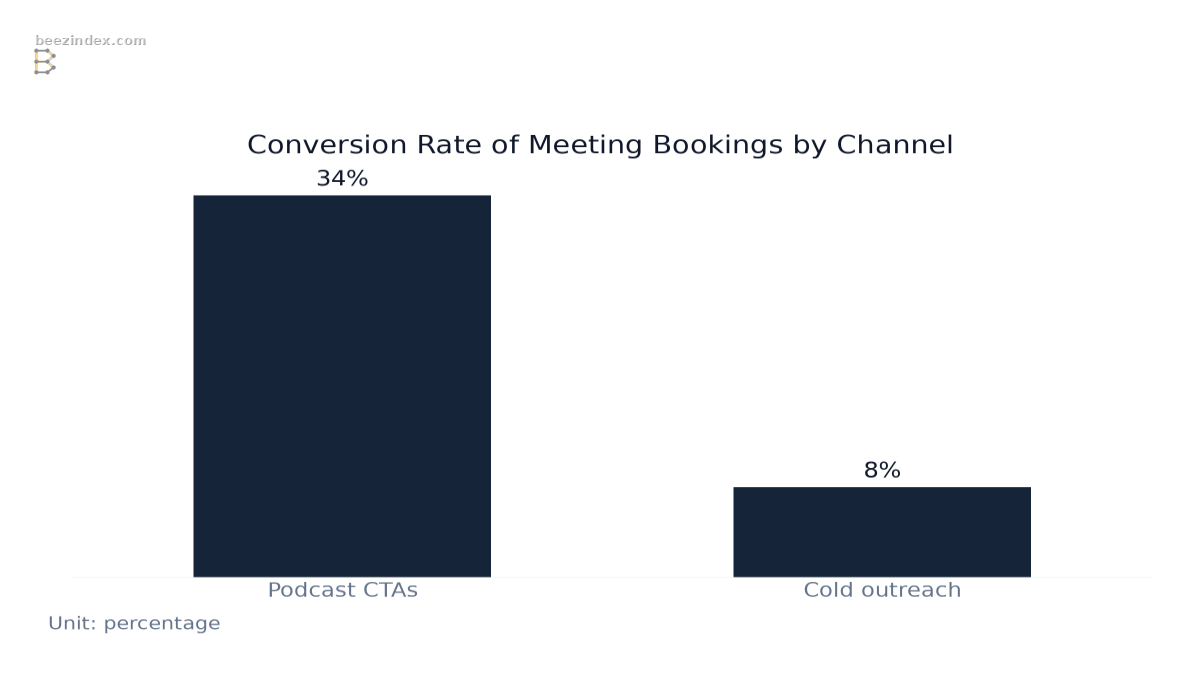
Search results suffer from AI content saturation because automated writing tools produce thousands of generic articles daily. Corporate buyers now distrust standard blog posts and actively seek authentic insights from named industry leaders. Many growing companies update their website navigation changes to place newsletters and audio shows directly in primary header menus. Commercial analysts who evaluate sales cycle efficiency notice that owned audience channels create faster trust during early discovery. Meeting bookings from podcast CTAs (34%) convert at a higher rate than cold outreach (8%).[1]
Companies previously buried multimedia links inside website footers or generic resource submenus. Modern web architecture elevates these channels to the top navigation bar because direct subscriber relationships beat declining organic search traffic. Sales representatives who monitor these digital shifts gain valuable conversational hooks that resonate with executive decision makers.
Conversion Rate of Meeting Bookings by Channel
Human-Led Marketing Channels Build Authority
Senior buyers want verified perspective from real operators rather than anonymous summaries. Audio discussions and curated newsletters prove genuine technical knowledge because they feature direct dialogue between experienced practitioners. B2B firms that commit to these formats demonstrate clear confidence in their internal subject matter experts.
Marketing teams use original audio discussions to create diverse collateral across multiple business touchpoints. A single podcast recording produces detailed newsletter essays, short video clips for professional networks, and actionable quotes for sales collateral.
Beyond just building authority, these channels provide tangible data points for your market research efforts.
Researchers can start with a free search on BeezIndex to evaluate target accounts and inspect active content signals. Identifying verified digital footprints helps business development teams filter companies that invest in long-term brand authority.
Newsletter Podcast Adoption Among B2B Buyers
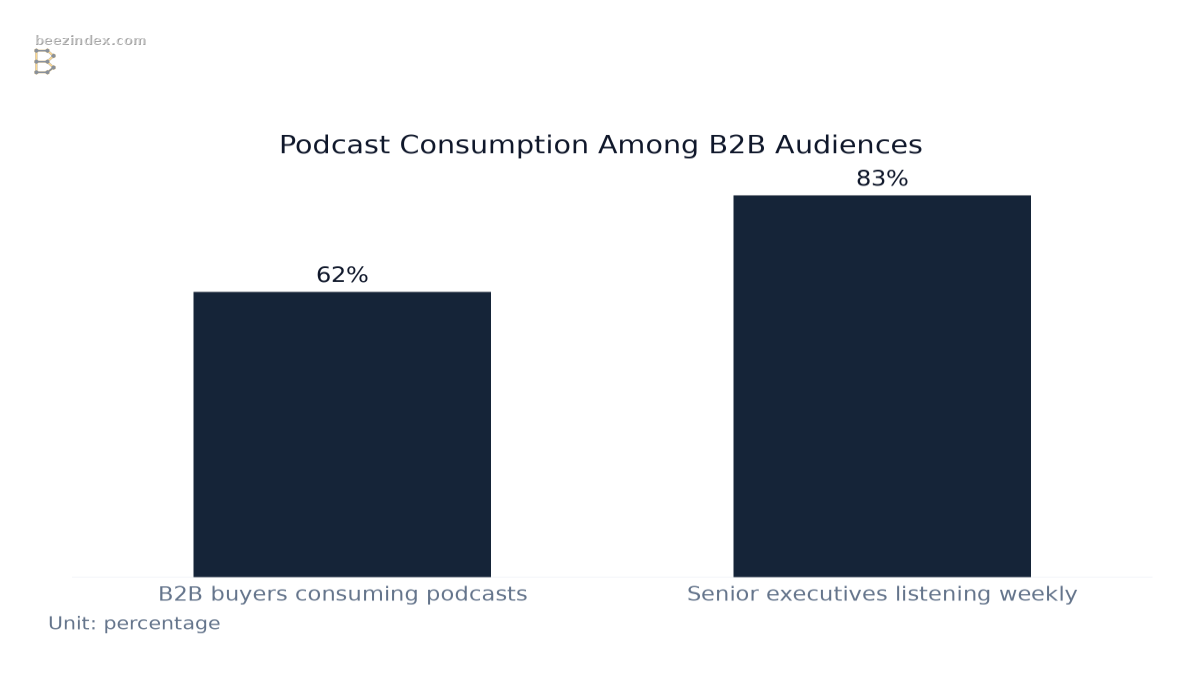
Executive teams embrace newsletter podcast adoption because audio and direct inbox messaging fit demanding executive schedules. Research shows that 62% of B2B buyers consume podcasts, and 83% of senior executives listen to at least one episode weekly.[2] Decision makers use commute times and personal exercise sessions to absorb detailed business analysis away from crowded computer screens. Analysts who gather market intelligence while staying compliant while scraping websites track these public navigation signals to segment potential software buyers accurately.
Listeners complete 80% to 90% of business podcast episodes, while standard written web pages achieve completion rates below 5%.[2] This sustained attention spans twenty to forty minutes, creating deep familiarity with the host company. B2B brands capitalize on this focus by discussing complex operational problems rather than running hard commercial pitches. Sales teams that identify active podcast operations can reference specific interview topics to establish immediate rapport with prospect accounts.
Podcast Consumption Among B2B Audiences
Spotting Navigation Shifts in Target Accounts
Once you understand the strategic value of these channels, you can begin identifying them in the wild.
Company websites signal strategic marketing pivots through subtle modifications to primary header menus. Organizations that replace standard product dropdowns with prominent media buttons reveal a clear move toward audience-first business development. These digital adjustments indicate that leadership views brand authority as their primary competitive differentiator.
Researchers find distinct navigation patterns when auditing modern B2B websites across different growth stages. Mature firms often assign top-level menu space to weekly industry briefings, interview series, or customer community platforms. These public menu updates provide reliable evidence that the vendor funds dedicated content production teams while saving valuable research hours for sales teams.
Budget Signals Behind UK B2B Podcasts
Launching an internal studio signals significant commercial commitment because ongoing production demands dedicated financial and operational resources. A professional podcast recording setup costs between £300 and £800.[1] Full-service production agencies charge between £1,200 and £4,000 per episode for professional recording, audio engineering, and distribution management. Organizations that invest in scaling support with ai often combine automated customer workflows with high-touch, human-led media production to build authority.
Companies operating tight or purely reactive marketing budgets rarely risk primary navigation space on audio productions. Evaluating these observable web assets helps enterprise sales representatives identify accounts that maintain healthy discretionary operating budgets. Tracking production consistency across several months confirms that the target company sustains continuous commercial investment.
Professional Podcast Recording Setup Cost Range

Content Strategy Clues for Market Research
These navigation choices are not random; they serve as a roadmap for how a firm prioritizes its audience engagement.
Website navigation links tell researchers exactly how a B2B firm intends to attract and educate buyers. A prominent newsletter tab shows an emphasis on capturing direct subscriber data and building owned distribution. A primary podcast button reveals an ambition to shape industry opinion through executive dialogue.
Enterprise buyers face prolonged procurement cycles involving six to ten individual stakeholders across multiple internal departments. Modern content programs support these complex journeys by providing educational material that champions can share with internal committees.
Strategic shifts in main navigation menus also highlight changes in executive leadership or brand repositioning. Firms entering new commercial sectors frequently launch specialized interview series to establish instant credibility among unfamiliar buyer groups.
Using Media Signals in Sales Conversations
Sales representatives achieve higher response rates when they incorporate observable company signals into their prospective outreach. Referencing a recent guest interview or an editorial newsletter topic demonstrates thorough preparation and genuine commercial curiosity. Sellers who spend time identifying cloud based project platforms alongside editorial media links develop comprehensive profiles of target operating models. Meeting bookings convert significantly faster when representatives discuss real topics rather than repeating generic sales pitches.
Podcast-influenced deals close 23% faster and generate 47% higher average contract values across enterprise accounts.[2] Buyers who consume an executive episode already understand the vendor's commercial philosophy and problem-solving framework. Sales teams can share relevant episode links directly with secondary stakeholders to resolve technical objections during contract reviews. Monitoring which accounts maintain active media assets helps sales development reps focus on prospects with high commercial maturity.
Regulatory Rules for Sponsored Business Audio
While these media channels offer strategic advantages, they also subject firms to specific regulatory oversight.
UK commercial regulations enforce strict disclosure requirements on corporate media productions and digital content broadcasts. The ASA and CAP Non-broadcast Code requires all commercial teams to identify sponsored content clearly at the episode start.[1] B2B firms must state financial partnerships transparently to avoid regulatory penalties and maintain audience trust.
Data protection laws also govern how companies capture and store newsletter subscriber records across Britain. The Information Commissioner's Office enforces strict rules regarding lawful basis, transparent consent, and objection handling for corporate contact data. Companies managing owned media channels must maintain secure subscription forms that comply fully with UK GDPR requirements.
Organizations that maintain strict legal compliance across their public media programs demonstrate higher operational and legal maturity. Auditing privacy policies and sponsorship disclosures provides researchers with clear indicators of corporate governance standards.
What to Remember
Prominent newsletter and podcast links in main navigation menus signal a company's move toward defensible, human-led marketing channels. Businesses make this shift because meeting bookings from podcast calls to action convert at 34% compared to 8% for cold outreach. Tracking these structural website adjustments provides market researchers and sales teams with verifiable indicators of commercial intent and marketing investment.
Teams conducting prospect qualification should examine top-level navigation bars for owned media signals rather than relying solely on static company registries. Audit your target accounts today to identify which vendors run dedicated audio and newsletter programs. Use these public editorial themes in your next business development campaign to build immediate credibility with senior buyers.
Frequently Asked Questions
Why do B2B websites put podcasts in the main menu?
Companies feature podcasts in top navigation menus to bypass search engine clutter and build direct relationships with senior buyers. Placing audio programs in primary headers highlights original industry insight and signals high corporate credibility.
How does main navigation placement affect newsletter signups?
Moving a newsletter link from the footer to the main header increases subscription rates by keeping the publication visible on every page. High visibility transforms passive site visitors into measurable first-party email contacts.
What does a podcast link tell researchers about a firm's budget?
An active business podcast indicates dedicated marketing expenditure because professional production agencies charge between £1,200 and £4,000 per episode. Ongoing releases confirm that the company maintains sustainable discretionary operating budgets.
How can sales reps use customer podcasts in outreach?
Sellers can listen to recent episodes and cite specific viewpoints shared by the prospect's executive team during outreach. Referencing published discussions proves thorough account research and establishes immediate commercial relevance.
Are B2B corporate podcasts subject to UK advertising rules?
Yes, business podcasts must follow the ASA and CAP Non-broadcast Code by identifying sponsored content clearly at the start of each recording. Corporate producers must disclose commercial relationships transparently to remain compliant with UK regulations.
Start with a free search on BeezIndex to discover UK companies investing in verified content channels and digital growth.
Track B2B Website Signals Faster