
Nov 13, 2026
Agentic AI Chat Widgets on UK SME Sites Show Real Support Automation
Agentic AI chat widgets on UK SME websites resolve 78% of customer inquiries compared to 52% for rule-based systems. You can identify production-grade support automation by monitoring response latency and API integration signals. These technical indicators reveal which UK businesses prioritize digital maturity and operational efficiency in 2026.

Customer service teams across Britain face rising ticket volumes while handling repetitive questions about deliveries, refunds, and booking details. You can now identify companies that deploy production-grade automated agents by tracking specific web interface components and backend integration signals. Our analysis of live digital touchpoints reveals which commercial operators run genuine multi-step operations rather than superficial FAQ popups. Detailed website feature audits uncover concrete technological investments that signal operational maturity across competitive regional markets. These technological upgrades highlight broader digital transformation trends.
Defining Agentic AI in UK SME Support
An agentic AI chat widget executes multi-step business actions rather than providing simple scripted responses to customer inquiries on commercial websites. Modern deployments connect language models directly to inventory databases, scheduling calendars, and transactional software through secure API endpoints. Companies use this business-level intelligence layer to validate incoming customer requests, check operational databases, and complete end-to-end tasks without manual staff involvement. Analysts who assess corporate data quality track these functional capabilities to separate serious technology adopters from businesses running temporary experiments.
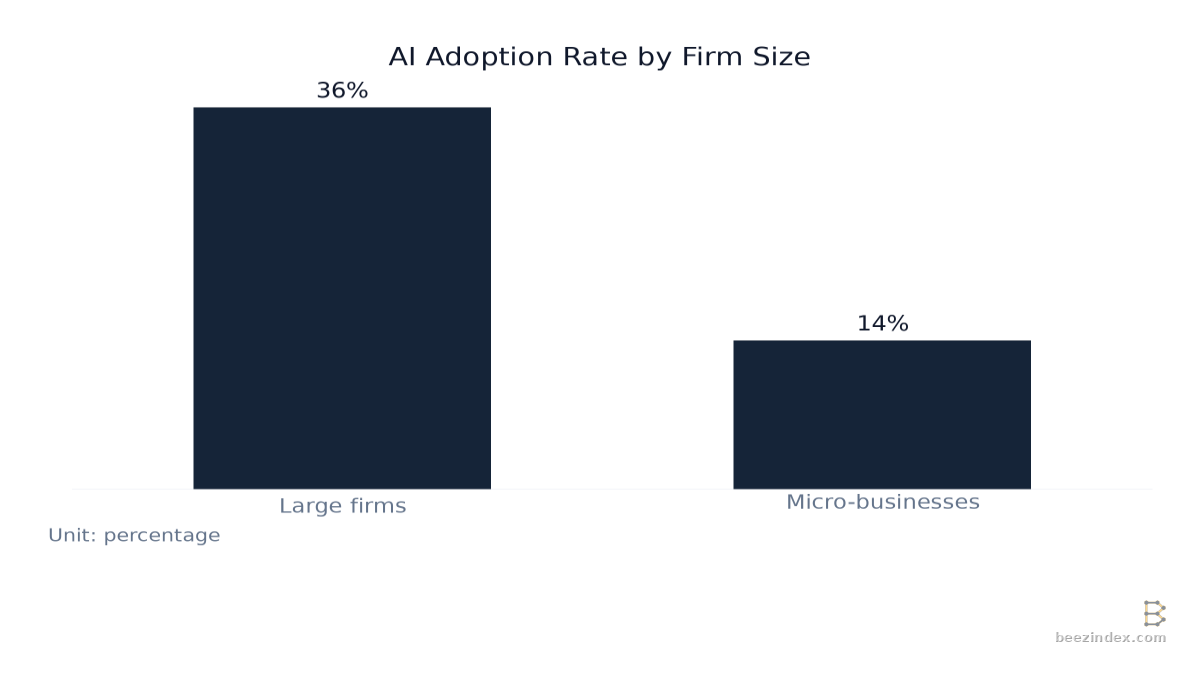
Operational adoption rates highlight a substantial gap across different corporate tiers in the United Kingdom commercial market. Market research confirms that AI adoption is 36% in large firms compared to 14% in micro-businesses.[2] Small operators often hesitate to add deep software integrations because custom tool execution requires structured database hygiene and careful maintenance. However, forward-thinking British enterprises invest in agentic workflows because resolving support tickets autonomously reduces overhead expenses and lowers user abandonment rates across public storefronts.
AI Adoption Rate by Firm Size
Identifying Real Automation vs Test Scripts
While casual browsers often encounter basic conversational scripts that return canned responses from static text files, production systems operate differently. These advanced architectures rely on perception, reasoning, tool execution, and deterministic validation schemas to manage complex inquiries.[3]
Response latency reveals the underlying computing architecture during live web user sessions. Basic scripts return answers instantly from pre-recorded menu paths. Autonomous platforms exhibit short processing pauses while querying external inventory or delivery tracking APIs. Users abandon interactions after three failed conversational attempts when tools provide unverified guesses instead of accurate data.[1]
Escalation protocols provide definitive evidence of professional customer support AI installations across modern web domains. Robust business configurations transfer complex or high-risk conversations to human staff with full transcripts. Unmonitored sandbox scripts lack human handoff mechanisms and fail when user requests exceed basic menu limits.
Market Adoption and Performance Trends
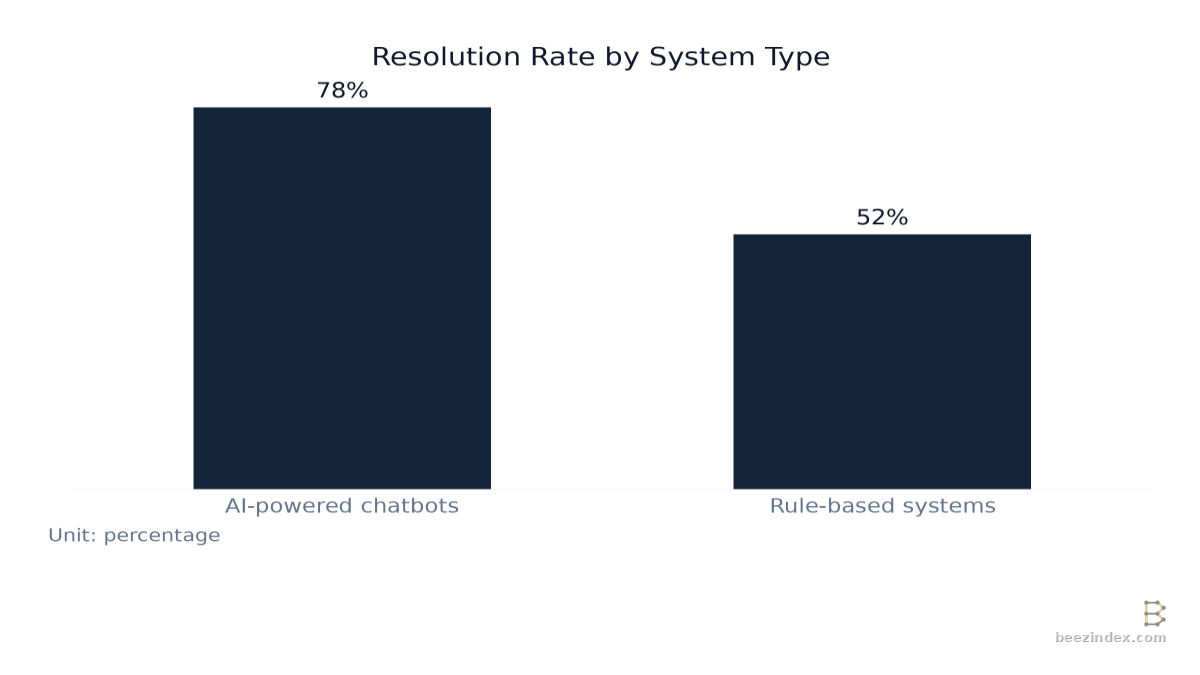
Modern customer support AI delivers measurable commercial advantages over traditional decision-tree widgets on commercial platforms. Performance benchmarks show that AI-powered chatbots achieve 78% resolution vs 52% for rule-based systems.[1] Autonomous platforms reduce query handling expenses significantly, costing $0.50 to $0.70 per interaction compared to $6 to $15 for manual human handling. Business development researchers track these public assets because technical footprints remain directly connected to what is observable online across digital storefronts.
Commercial intelligence teams unify disparate company information to evaluate digital infrastructure investments across diverse UK enterprise cohorts. Modern automated agents save business users an average of 2.2 hours per 40-hour work week by eliminating routine customer administration tasks.[2] Organizations that connect conversational agents to enterprise resource platforms resolve buyer tickets on first contact without human staff intervention.
Resolution Rate by System Type
Implications for Account Review and Sales
Sales intelligence specialists review live website widgets to determine commercial readiness and capital expenditure priorities across target accounts. Commercial prospect lists gain verified company-to-website intelligence when analytical teams record dynamic customer support integrations on live domains. Field representatives identify high-intent merchant accounts by observing headless e-commerce integrations, custom webhook connections, and integrated transaction management tools.
Auditing operational tools helps research analysts keep research moving while evaluating high-growth UK SME automation initiatives. Corporate entities that deploy functional automated customer support demonstrate digital maturity, organized database management, and active software expenditure. By focusing on these indicators, account executives save administrative time, prioritizing enterprises with proven digital automation budgets over static, legacy firms.
Regulatory and Compliance Considerations
British enterprises must manage strict legal obligations when installing autonomous customer support software on public customer portals. The Data (Use and Access) Act 2025 permits automated decision-making while enforcing clear disclosure standards for online consumer interactions. Corporate governance frameworks require human oversight for consequential account actions to satisfy UK GDPR Article 28 data processor obligations.[1] Research teams evaluate compliance by tracking evidence and freshness indicators across client software installations.
Corporate research specialists focus on resolving data silo problems when evaluating external enterprise data feeds and compliance footprints. Autonomous tools deliver tangible operational returns, helping AI-adopting SMEs achieve productivity gains of 27% to 133%. Organizations that install deterministic data validation maintain regulatory compliance while achieving rapid capital payback across high-volume customer service operations.
Productivity Gains for AI-Adopting SMEs

Leveraging Intelligence for Prospecting
Beyond simple observation, sales teams must identify verifiable technical infrastructure signals to evaluate prospective commercial buyers. Discovery platforms like BeezIndex track observable technographic changes and customer support widgets across UK web domains. Companies maintain competitive research pipelines by filtering enterprise targets through verified digital deployment indicators.
Analytical workflows benefit from structured search tools that monitor active corporate technologies and public website components. Users start with a free search to explore company data and identify businesses adopting automated support tools. Professional teams upgrade their account plans to access automated portfolio tracking, team collaboration features, and detailed firmographic filters.
Strategic account intelligence improves when researchers combine corporate filings with observable website functionality. Commercial vendors assess prospect budgets by checking checkout platforms, payment gateways, and automated customer conversation agents. High confidence prospecting requires empirical proof of active digital investment rather than speculative self-reported survey responses.
Future Outlook of SME Support Automation
Support automation will expand rapidly as enterprise software vendors embed task-specific agents into standard operational software packages. Projections indicate that 40% of enterprise applications will include task-specific AI agents by the end of 2026.[2] British businesses will move beyond passive informational popups by connecting agentic tools directly to payment gateways and logistics tracking networks. Commercial researchers examine public digital infrastructure to understand your market and evaluate competitive investments across active trading sectors.
Market analysts track observable digital changes to determine which companies successfully navigate complex enterprise automation projects. Research teams apply data protection for market research to verify corporate developments without violating statutory privacy standards. Commercial observers identify meaningful changes across British business operations by monitoring live interface upgrades and structured digital support channels.
What to Remember
Live agentic chat widgets represent a measurable indicator of technical maturity and operational efficiency across the British business ecosystem. Performance data confirms that autonomous support installations resolve 78% of incoming inquiries compared to only 52% for legacy rule-based chat scripts.[1] Organizations that integrate conversational interfaces with operational databases achieve lower operational overhead, faster customer resolution times, and better data accuracy across high-volume communication channels.
Market researchers and sales development teams benefit from evaluating live technical footprints to identify high-value enterprise prospects effectively. Auditing website latency, tool integration actions, and compliance notifications allows analysts to separate production deployments from simple test scripts. Exploring verified digital signals provides teams with clear evidence to evaluate competitive accounts and target mature business partners.
Frequently Asked Questions
How do I spot a test script on a live website?
Basic test scripts return canned text instantly and fail when handling multi-step queries like order changes. Production systems show brief latency while connecting to external APIs and offer explicit human escalation pathways.
What is the difference between an agent and a chatbot?
Standard chatbots only match text patterns against fixed knowledge documents to answer common questions. Agentic systems use reasoning loops and validation schemas to execute live transactions across external software databases.
How does automated support impact sales workflows?
Identifying live support automation allows sales teams to qualify prospects based on proven technical spending and digital maturity. Outbound representatives can filter target accounts using confirmed software installations rather than self-reported claims.
What does a bespoke agentic deployment cost UK SMEs?
Custom deployments from UK software agencies generally cost between £2,300 and £85,000 depending on database complexity. Off-the-shelf software subscriptions range from £360 to £6,500 during the first year of operation.
Which UK data regulations govern automated website agents?
Automated conversational tools must comply with the Data (Use and Access) Act 2025 and UK GDPR Article 28 data processor rules. Websites must disclose automated operations to consumers under the Digital Markets, Competition and Consumers Act 2024.
Start a free search on BeezIndex to discover UK businesses adopting live AI automation, and upgrade your plan to access advanced company monitoring tools.
Track UK SME Digital Deployments TodayReferences
- Ai Automation Statistics 2026
- Beyond Chatbots Agentic Ai For Small Business Uk
- Ai Chatbots That Actually Work
- A Practical Guide to Setting Up Your First AI Chatbot for UK Business (2026 Step-by-Step Tutorial) | TopTenAIAgents.co.uk
- UK SME Automation Benchmarks 2026: What the Data Shows | SMEAutomate