
Nov 7, 2026
Spotting Common Data Environment Logos on UK Construction Websites
Integrated construction firms achieve project cost savings between 5% and 15% by using a common data environment. Commercial research teams identify these digitally mature UK builders by auditing website footers, client portals, and job vacancy listings for specific software signatures. This analysis helps sales teams target qualified enterprise contractors effectively.

Commercial research teams waste countless hours chasing construction firms that lack modern digital systems. Website signals reveal which contractors manage live projects with connected platforms and which still rely on disconnected spreadsheets. You can qualify prospective enterprise accounts in minutes when you identify specific software badges, client portals, and public compliance markers. Reliable technical markers separate digitally capable builders from slow adopters before your team makes initial contact.
The Strategic Role of Common Data Environments in UK Construction
A common data environment serves as a central repository for all project information on a build. Contractors use this architecture to store drawings, safety logs, and structural models in a single location. The construction sector accounts for approximately 6% of UK gross domestic product.[1] Teams that lack central data platforms suffer frequent communication errors and expensive rework on site.
Engineering teams adopt UK construction software to meet the rigorous framework established by BS EN ISO 19650 standards.[1] These regulations establish standard naming conventions and clear data states across the lifecycle of every building asset. Researchers who analyze public footprints often distinguish scripts from integration to verify genuine corporate workflow adoption. Unverified website snippets often mislead analysts into counting casual software trials as enterprise rollouts.
Modern contractors require connected platforms to coordinate subcontractors, structural engineers, and public planning authorities without administrative delay. Central repositories prevent costly disputes by maintaining an immutable record of every model revision and approval stage.
Identifying Common Data Environment Logos on Builder Websites
Contractor websites display technology badges in website footers, client access portals, and project case study sidebars. Enterprise builders often feature login links to external portals hosted by systems like Autodesk Construction Cloud, Procore, or Viewpoint. Field teams struggle to maintain consistent quality when commercial partners lack accessible digital portals.
Subcontractor pre-qualification pages provide another reliable area to locate built environment tech affiliations and preferred file protocols. Builders frequently state their mandatory document upload systems directly within supply chain registration forms. Marketing teams that audit contractor web estates can capture these visible signals to score digital maturity accurately.
Quantifying Efficiency Gains in Integrated Construction Projects
Integrated digital platforms deliver measurable economic advantages to commercial building teams. Successfully integrated firms are achieving project cost savings typically ranging from 5% to 15%.[2] Central data access lowers waste and speeds up project handovers across complex commercial developments.
Project managers utilize construction digital tools to streamline collaboration between design consultants and site managers while successfully building strong operational habits. Commercial researchers structure actionable market insights by correlating contractor technology adoption with financial resilience.
Adopting ISO 19650 frameworks provides clear visibility into project timelines and supply chain deliverables.[1] Information containers transition smoothly between Work in Progress, Shared, Published, and Archived states under these rules. Teams eliminate version confusion and avoid installing incorrect components on active construction sites.
Cost Savings from Digital Project Integration

Interpreting Digital Maturity Through Website Signals
Job vacancy listings on builder websites reveal active digital investments and practical software implementations. Contractors seeking Information Managers, BIM Coordinators, and Document Controllers show an active commitment to structured data protocols. The absence of specialized information roles indicates that a firm likely treats software tools as administrative storage rather than collaborative infrastructure. Organizations that employ dedicated digital managers maintain cleaner project models and higher data integrity across their supply networks.
Case studies and news posts supply visible proof of active cloud collaboration across major infrastructure builds. Contractors routinely name the digital tools used to complete complex joint-venture assignments in published project retrospectives. Firms that omit software details from project profiles often lag behind in technical modernization and supply chain integration. Researchers evaluate these public updates to verify company-to-website intelligence and confirm enterprise software use.
Built Environment Tech Trends in 2026
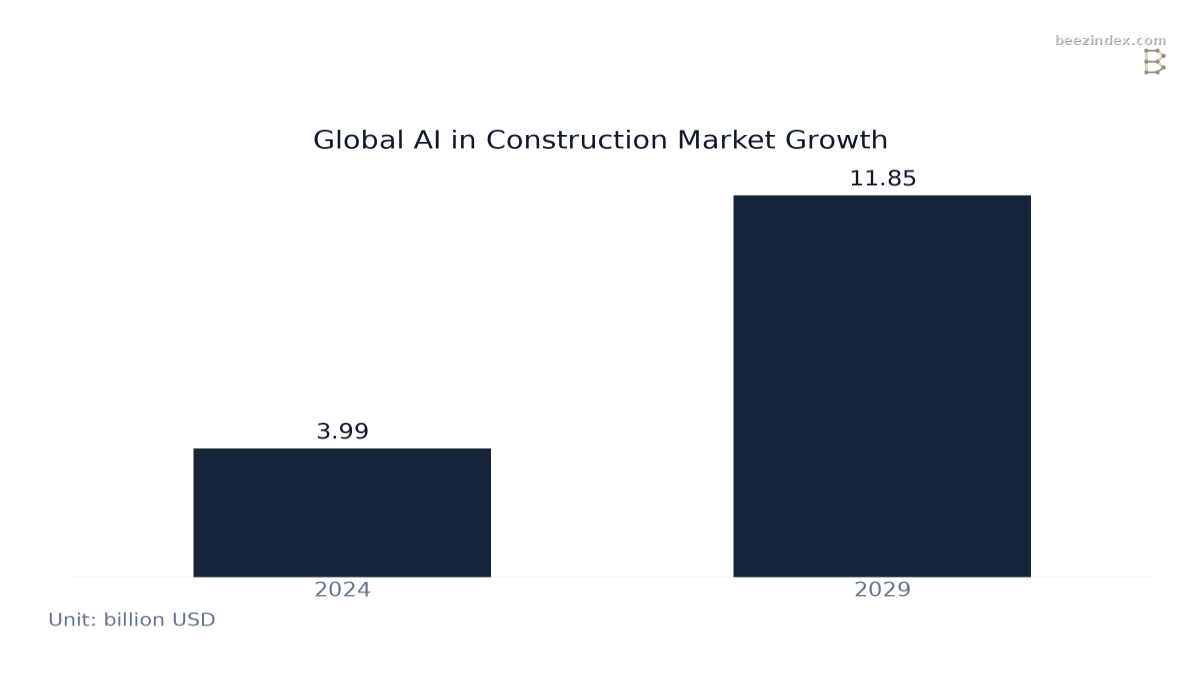
The construction software sector is experiencing rapid expansion as artificial intelligence and predictive modeling take hold. The AI in construction market is projected to grow from $3.99 billion in 2024 to $11.85 billion by 2029. Commercial contractors use predictive algorithms to forecast material delays and manage labour allocation across large job sites. Firms that ignore these tools risk falling behind as automated scheduling replaces manual planning spreadsheets and outdated workflows.
Platform vendors now prioritize open application programming interfaces to connect disparate field systems into unified operating dashboards. Researchers must account for shifting technical signatures when troubleshooting broken signal records after major software provider migrations. Modern contractors replace isolated server setups with connected cloud platforms to preserve institutional knowledge across multi-year developments. Clean technical data foundations protect companies from escalating software maintenance costs and operational blind spots.[2]
Global AI in Construction Market Growth
Using BeezIndex to Monitor Software Adoption
BeezIndex tracks observable web intelligence to help commercial teams identify UK builders using modern cloud software. The platform scans corporate web estates to detect client login portals, career listings, and platform integrations with high confidence. Automated discovery allows B2B software vendors to target qualified contractors while avoiding companies that lack digital maturity.
Account executives can start with a free search to explore contractor data before configuring automated alerts for meaningful changes. BeezIndex connects public footprint evidence directly to corporate profiles so commercial teams can monitor technical upgrades across target contractors. Combining verified company-to-website intelligence with structured firmographic records accelerates sales qualification cycles.
Future-Proofing Construction Market Research
Statutory filings rarely capture the true operational sophistication of modern engineering and building businesses. Standard industrial classification codes group high-tech builders under generic building categories that obscure their digital capability. Analysts avoid these blind spots by searching niche analytics markets and monitoring live technical footprints. Evidence-based market tracking reveals which contractors invest actively in modern field management tools and automated workflows.
Sales teams build accurate market profiles when they track visible software signals across multiple corporate touchpoints. Combining observable web signals with first-party qualification metrics improves sales pipeline conversion by 10% to 30%. Organizations that evaluate supplier portals, career vacancies, and digital certifications identify receptive enterprise buyers faster. Maintaining fresh web intelligence ensures commercial teams act on verified operational shifts rather than outdated registry classifications.
What to Remember
Spotting common data environment logos and supply chain portal links allows commercial teams to assess builder technology readiness accurately. Integrated firms achieve project cost savings between 5% to 15%, proving that connected data drives operational excellence.[2] Tracking technical signals across corporate footers, career pages, and subcontractor forms separates modern contractors from technologically dormant businesses. Observable web indicators provide verifiable proof of software adoption without relying on generic government registry classifications.
Begin your technical audit by reviewing contractor login portals and open digital engineering job vacancies. Sales teams that combine digital footprint signals with firmographic filters can focus their outreach on ready buyers and boost conversion rates. Use verified company-to-website intelligence to keep research moving and maintain a competitive advantage across the UK construction sector. Industry leaders consistently rely on fresh data to outperform competitors.
Frequently Asked Questions
What is a common data environment in construction?
A common data environment is a centralized digital repository used to store and manage project documentation and building models. It serves as a single source of truth under ISO 19650 standards to prevent version conflicts. Contractors and design partners use it to coordinate revisions across every phase of a build.
Where do contractors display software logos on their websites?
Contractors usually place platform badges in website footers, subcontractor registration portals, and dedicated supply chain pages. You will also find platform names mentioned inside detailed project case studies and sustainability reports. Client login menus frequently link out to specific enterprise cloud subdomains.
Why do builders advertise their project collaboration tools?
Builders display their digital systems to prove compliance with public sector procurement rules and modern quality standards. Showing active collaboration platforms assures clients and joint-venture partners that the firm manages project risks systematically. It also informs trade subcontractors about mandatory file-sharing protocols before bidding begins.
How do job postings confirm construction software adoption?
Job advertisements for Information Managers and BIM Coordinators list mandatory experience with specific technical platforms. These listings prove that a contractor uses the software in daily operations rather than merely holding an inactive trial license. Role descriptions often detail the exact platform modules and workflow standards applied on active sites.
How does BeezIndex identify construction technology stacks?
BeezIndex analyzes public web estates to detect software signatures, supplier portal links, and digital hiring requirements. The platform organizes these observable indicators into structured profiles so sales teams can filter contractors by technical capability. Users can explore company data through an initial free search before activating advanced tracking features.
Start a free search on BeezIndex to discover UK construction firms using modern data environments, then upgrade to unlock advanced monitoring features.
Find Tech-Ready UK Builders Today