
Oct 21, 2026
What Klarna and Clearpay Checkouts Reveal About UK Retailers
Payment icons on UK checkout pages reveal a retailer's target customer age, average order value, and profit margins. Stores using Klarna or Clearpay often see a 20% to 30% boost in order value. Sales teams use these public technical signals to classify merchant health and strategy without needing private financial reports.

Payment icons on storefront pages reveal deep operational data about digital merchants. A quick glance at a checkout drawer exposes a shop's typical basket size and customer age profile. You waste valuable sales time when you treat every digital merchant as a generic sales prospect. Visible payment methods provide clear evidence that separates growing consumer brands from stagnant online stores.
Demographic Clues in BNPL UK Ecommerce
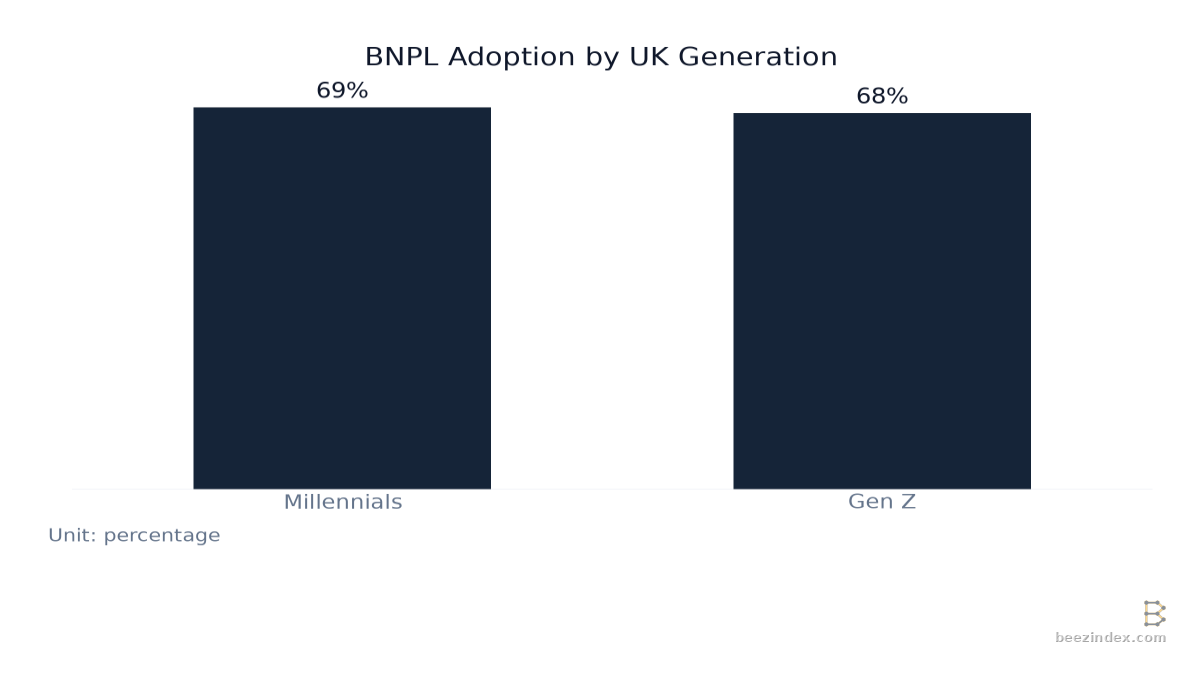
British online sellers pick payment methods to attract specific consumer demographics and protect their conversion rates. Clearpay checkout buttons signal younger buyers who prefer scheduled debit installments, while Klarna appeals broadly across older digital shoppers. Recent industry surveys show that 69% of millennials and 68% of Gen Z have utilized BNPL services to complete purchases online.[1] These installment tools dominate youth apparel and beauty stores because younger shoppers rely on flexible debit schedules. Analysts evaluate these payment methods to UK retail and map store demographics without buying expensive market research reports.
Storefronts displaying multiple deferred installment options tailor their commercial experience around debt-free short-term credit. Approximately 5.6 million UK adults use these installment options regularly to budget their household purchases.[2] However, shops focusing on older buyers over 55 rarely install these buttons because adoption drops below 20% in mature groups. Merchants who stock older demographics instead feature standard debit card gateways or traditional bank options. Observing installment icons lets researchers classify customer age brackets in seconds.
BNPL Adoption by UK Generation
Observable Web Intelligence for Sales Teams
Sales teams use observable web intelligence to scan storefront source code and locate installed checkout gateways quickly. Public scripts, frontend footer badges, and checkout drawer forms reveal the exact payment stack of any digital merchant. Modern tools detect active merchant IDs directly from public website assets without entering private administrative areas.
BeezIndex allows modern sales teams to filter UK businesses by technology, including payment gateways. Start with a free search to explore company data and upgrade to access advanced monitoring features. Teams verify merchant software changes in minutes instead of manually browsing hundreds of web stores.
Beyond simple detection, this intelligence layer provides a business-level intelligence layer for commercial teams.
Tracking installed financial software exposes company changes before brands publish official press releases. A retailer adding flexible installment tools usually plans catalog expansions or targets younger buyers. These technical indicators give commercial researchers verified evidence about retailer strategy. Automated tools scan storefronts daily.
Order Value Patterns at Clearpay Checkout
Flexible payment gateways reveal average order value targets because installment providers design their models for specific price bands. Clearpay splits transactions into four equal fortnightly payments, making it ideal for carts under one hundred pounds. Data shows that integrating BNPL into Shopify stores typically increases average order value (AOV) by 20% to 30%.[1] Merchandisers place these payment buttons to push shoppers past standard basket thresholds. This tactical pricing approach works best when boosting retail conversion rates for mid-tier lifestyle and cosmetic brands across the UK.
Klarna serves broader price bands because its Pay in 30 days and Pay in 3 plans support purchases up to five hundred pounds. Research confirms that installment services deliver the strongest commercial gains for products priced between £80 and £300.[1] In contrast, shopping baskets below £30 gain no measurable benefit from installment plans. High-ticket furniture and luxury merchants often omit Clearpay because their orders require regulated financing tools. Researchers can infer an online shop's typical basket size simply by auditing its active payment integrations.
Shopify AOV Increase from BNPL Integration

Reading Commercial Margins and Merchant Risk
Transaction fee structures differ sharply across payment providers and directly impact merchant operating margins. Clearpay charges merchants a transaction fee near 6% for handling consumer underwriting and managing fraud risk.[1] Klarna transaction fees range from 0.99% + 20p to 2.49% + 20p, providing better economics for high-margin brands. A store carrying expensive gateway fees must generate high gross product margins to remain profitable. Processing costs dictate long-term viability across competitive sectors.
High merchant discount rates force low-margin electronics retailers to avoid flexible financing completely. Retailers with tight 10% margins lose half their profit if they pay 6% processing fees. In contrast, fast-fashion sellers with 60% gross margins easily absorb high gateway fees to accelerate order velocity. Checking a seller's payment options therefore reveals whether the company operates on premium or discount economics. Financial analysts track these metrics closely.
Regulatory Rules Reshaping UK Payment Methods
British regulatory changes alter how online merchants display payment options on product pages and checkouts. The Financial Conduct Authority requires strict consumer affordability checks and transparent credit disclosures for all deferred payment agreements.[2] Merchants who maintain clear checkout paths while complying with these legal standards ensure consumer trust. Data reveals that integrating BNPL into Shopify stores typically increases conversion rates by 6% to 8%. However, retailers who fail to display clear pre-contract fee information face severe penalties from consumer protection agencies, as they must fix broken email automations and checkout flows to remain compliant.
Recent market rules require credit reporting for deferred purchases, which directly influences how British consumers manage repayment schedules. The UK remains the largest Buy Now Pay Later market in Europe despite rising regulatory compliance demands.[1] Installment providers now share customer payment data with credit agencies, pushing shoppers toward responsible spending habits. Merchants must use provider-approved copy on every product page to prevent misleading advertisements. Public compliance banners help researchers confirm whether a retailer updates its technical legal disclosures.
Shopify Conversion Lift from BNPL Integration

Tracking Storefront Technologies at Modern Scale
Automated intelligence monitors technical storefront changes across thousands of ecommerce domains simultaneously. Tracking code updates helps researchers follow shifting commercial strategies across large groups of British merchants. Modern algorithms process millions of data points hourly.
Sales teams identify expanding merchants when stores add new installment options during pre-peak seasonal updates. Technographic data reveals whether companies modernize their checkout drawers or rely on legacy card processing tools. Strategic shifts highlight emerging retail leaders.
Manual checks waste sales bandwidth. Automated web crawlers inspect technical signatures quickly. This ongoing process preserves data quality and keeps commercial research moving forward efficiently. Teams deploy scrapers for continuous market visibility.
These technical insights are connected to what is observable online, allowing teams to maintain high confidence in their outreach.
Future Growth Patterns for Klarna UK Retailers
British ecommerce checkouts continue to evolve as payment providers integrate account-to-account tools and embedded banking features. The United Kingdom Buy Now Pay Later market is projected to grow to USD 7.96 billion by 2034.[2] Mobile applications represent the fastest-growing transaction channel, expanding at a rapid 23.1% annual rate. Researchers monitor uk shopify store technology to detect emerging payment tools before competitors identify the shifting trends.
Payment consolidation is reshaping the commercial ecosystem as traditional high-street banks launch their own deferred installment options. These legacy institutions expand into short-term checkout lending at a 16.3% annual growth rate. Meanwhile, merchant discount rates fell by 15% across the sector due to aggressive provider competition. As open banking lowers card processing fees, merchants will balance installment availability against net operating margins. Watching checkout gateways gives analysts real-time visibility into digital commerce changes.
What to Remember
Payment buttons on public checkouts provide definitive evidence about retailer margins, target audiences, and average basket sizes. Stores adopting Klarna or Clearpay deliberately target millennial and Gen Z shoppers while targeting basket sizes between £80 and £300. Integrating flexible checkout tools lifts average order values by 20% to 30% while raising conversion rates by up to 8%. Sales researchers who inspect these frontend signals evaluate merchant health faster than teams relying on traditional credit filings.
Examine checkout pages across your target accounts to assess merchant customer demographics and margin structures before initiating outreach. Look for active installment scripts to verify technical sophistication and commercial intent. Sales teams should add checkout technology filters to their company discovery workflows to prioritise matching confidence when identifying high-converting digital brands. This approach ensures you keep research moving while focusing on meaningful changes in the market.
Frequently Asked Questions
What customer demographic uses Klarna and Clearpay the most?
Younger shoppers represent the primary demographic for installment solutions, with 69% of millennials and 68% of Gen Z using these services. Retailers add these payment options specifically to capture shoppers aged 18 to 34 who prefer scheduled payments over traditional credit cards.
How much do installment gateways increase online sales?
Shopify stores integrating deferred payment options experience average order value increases between 20% and 30%. These merchants also see overall checkout conversion rates rise by 6% to 8%.
What fees do UK merchants pay for deferred payment checkouts?
Klarna charges merchant transaction fees ranging from 0.99% plus 20p up to 2.49% plus 20p. Clearpay charges standard merchant fees closer to 6% in exchange for absorbing consumer fraud and chargeback risks.
Start with a free search on BeezIndex to filter UK businesses by payment gateways, then upgrade to monitor tech changes.
Find UK Retailers by Checkout Tech