
Nov 24, 2026
Read in: English (United Kingdom)
Only 17% of UK Firms Using AI Have a Written Policy
Official data shows 41% of UK firms use AI, yet only 17% maintain a formal AI governance policy. This guide helps procurement teams and analysts verify vendor claims by auditing privacy pages, sub-processor registries, and technical hiring requirements. Use these observable digital signals to avoid unvetted technology providers and protect your commercial partnerships.

Sales pitches and software landing pages often exaggerate operational machine learning claims across the United Kingdom. Public records and regulatory benchmarks show that true internal safeguards lag behind public marketing promises. You can protect your pipeline and vendor selection by verifying observable digital evidence instead of accepting unvetted sales declarations. Official data reveals a steep gap between commercial statements and real operational rules.
UK AI Adoption Outpaces Internal Governance
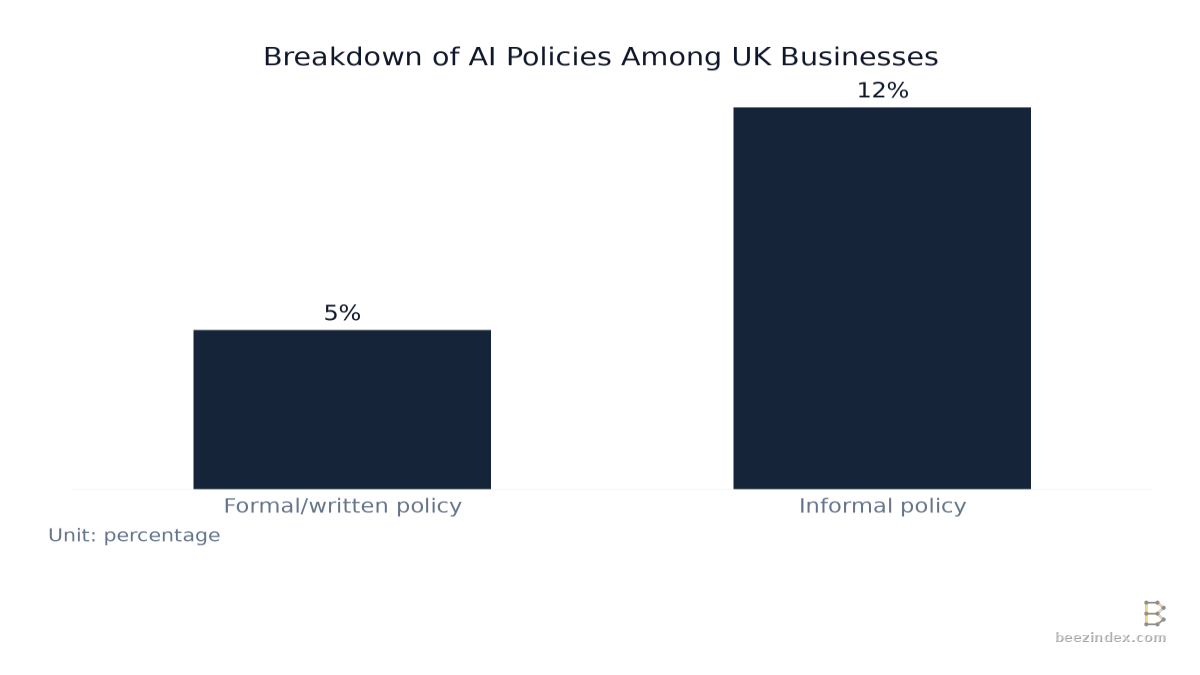
Official research confirms that 41% of data-handling British businesses actively deploy machine learning tools in their regular commercial operations.[1] Despite this widespread adoption, internal governance standards lag significantly behind. Only 17% of UK AI users maintain an AI policy, with a mere 5% opting for formal written documentation. Consequently, the vast majority of these organisations operate automated models without any established operational rules.
Teams that screen business entity types understand that informal rules may offer limited protection during contractual disputes or regulatory investigations.
Breakdown of AI Policies Among UK Businesses
Corporate Size Dictates AI Policy Reality
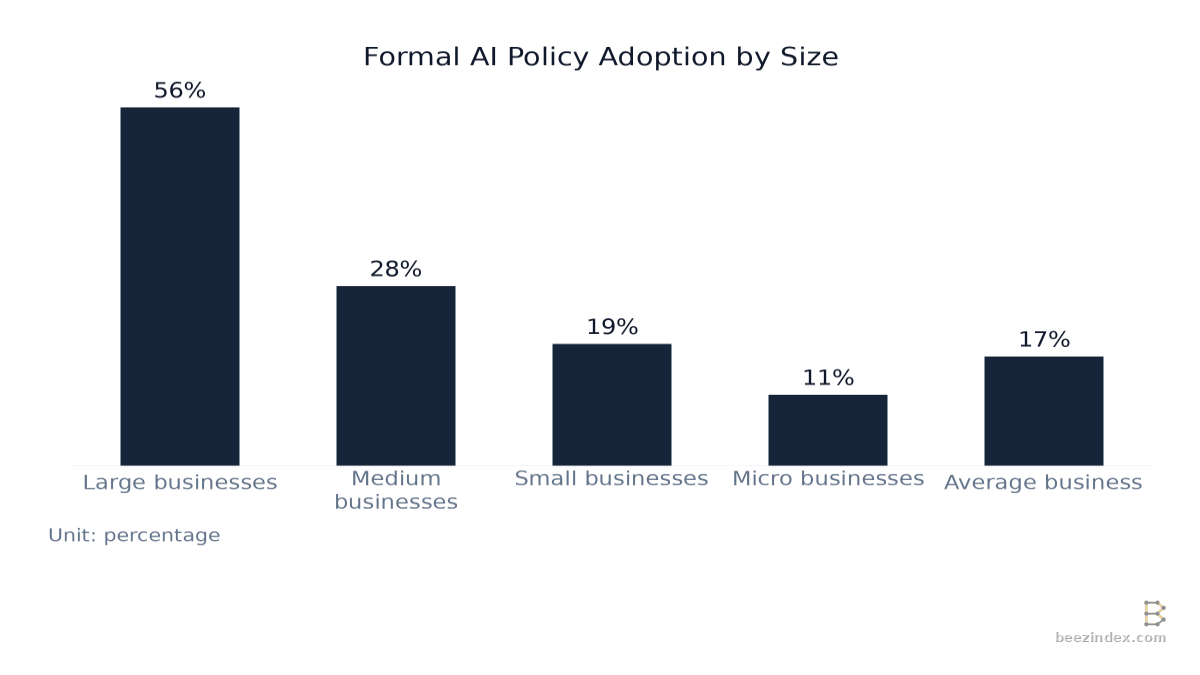
Enterprise organisations manage compliance risks far more systematically than smaller domestic competitors across the United Kingdom. Formal/written policy adoption stands at 56% among large businesses, while the overall average business achieves only 17%.[1]
Small suppliers often claim enterprise-grade automated workflows on public sales portals to win commercial deals. However, micro-enterprises and mid-market firms rarely maintain documented controls or dedicated compliance committees for automated processing.
Resource constraints drive this operational disparity across British industry sectors. Smaller enterprises often prioritize immediate commercial execution over the development of robust operational safeguards. Unfortunately, unaudited models frequently lead to compliance failures and unexpected vendor downtime for B2B buyers.
Formal AI Policy Adoption by Size
Reading Governance Signals on Company Websites
Modern data protection laws emphasize transparency regarding automated decision systems and international data processing activities. Organisations that maintain actual safeguards often describe third-party sub-processors, model training boundaries, and opt-out paths in their formal privacy statements.
Legitimate technology providers publish dedicated trust centres that detail their data segregation methods and encryption protocols. In contrast, superficial vendors rely on vague sales claims while hiding the technical realities of their cloud platforms. Marketing teams must note data privacy for marketers because collecting and processing digital footprints carries strict transparency obligations under domestic privacy statutes.
Verifying Technical Claims Through Hiring Signals
Recruitment postings reveal true internal priorities far more accurately than marketing brochures or homepage copy. An enterprise that claims autonomous automated operations must employ data engineers, infrastructure specialists, and governance professionals. Sourcing advertisements that seek basic administrative talent while promoting autonomous proprietary systems indicate marketing inflation rather than technical capability.
Public job descriptions define the operational software stacks, data libraries, and cloud infrastructure that teams use daily. When vacancy requirements omit data management frameworks or testing processes, commercial claims of advanced machine learning remain unsubstantiated. Procurement teams can avoid purchasing superficial tools packaged as complex proprietary models by auditing active engineering listings.
Autonomous Systems Demand Verified Partner Rules
As businesses integrate these tools into their core workflows, the need for rigorous oversight becomes critical to prevent operational and legal exposure.
Without documented corporate controls, automated agents can trigger data corruption, expose proprietary records, and potentially create risks regarding contractual privacy terms.
Procurement leaders now treat formal operational policies as a prerequisite for technological partnerships. Commercial contracts must define audit rights, model training boundaries, and immediate liability terms for automated errors. Researching legal requirements for web scraping and digital intelligence gathering protects commercial analysts from collecting corrupted or unlawful data profiles.
Tracking Public Signals with BeezIndex Intelligence
Market analysts require observable evidence to confirm technical adoption across thousands of commercial targets. While web scans reveal frontend components, they often remain blind to backend systems located behind enterprise firewalls.
BeezIndex tracks company profiles, hiring activity, and public website shifts across millions of UK business domains. Sourcing teams use these structured signals to separate authentic digital infrastructure from unverified marketing descriptions.
High confidence research requires combining corporate registry filings with observable digital activity. B2B analysts start with a free search to explore verified profiles before upgrading to deeper account monitoring.
Documented Governance Creates Strong Market Advantages
Corporate buyers prefer audited systems because unexpected regulatory penalties can disrupt operational software workflows.
Commercial suppliers demonstrate operational credibility when they maintain active public channels and transparent technical documentation. Market leaders often focus on connecting customers with brand content through clear educational channels, technical changelogs, and public safety statements. Transparent communication reassures enterprise prospects that digital systems follow statutory requirements and defend commercial confidentiality.
Key Takeaways for B2B Teams
Recent market audits confirm that only 17% of British businesses using automated systems maintain documented governance policies.[1] Commercial analysts cannot rely on landing page descriptions or sales rhetoric when selecting technology vendors or building prospect lists. Genuine operational capability produces observable evidence across website privacy notices, security disclosures, and technical recruitment listings.
B2B teams should audit public corporate signals systematically before committing capital to long-term commercial agreements. Cross-referencing hiring requirements and sub-processor disclosures ensures you partner with compliant, operationally mature enterprises across the United Kingdom.
Frequently Asked Questions
What percentage of UK businesses actively use artificial intelligence?
Official survey findings show that 41% of data-handling British enterprises use machine learning tools.[1] However, adoption rates vary significantly between large corporations and smaller regional suppliers.
Why do so few UK firms have a written AI policy?
Many businesses adopt commercial tools informally through employees without executive coordination. Small enterprises also lack the legal resources required to draft formal compliance documents.
How can buyers spot unverified technology claims on vendor websites?
Check the public privacy policy for listed model sub-processors and data training disclosures. A vendor that makes bold claims but omits technical disclosures often lacks real infrastructure.
Do UK data protection laws apply to automated business systems?
The UK GDPR applies when automated tools process personal information or make significant customer decisions.[2] Organisations should document lawful processing grounds and respect individual opt-out rights.
What role do job adverts play in checking tech stacks?
Job advertisements list the specific software libraries and infrastructure that existing staff use daily. If an organisation claims complex internal models but hires no engineering staff, their claims lack credibility.
Explore verified company intelligence across millions of UK domains. Start with a free search today to uncover real technical signals and monitor business changes.
Start Your Free UK Company Search