
Oct 5, 2026
Read in: English (United Kingdom)
How Web Agencies Can Find UK Businesses Needing a New Website
UK small firms without active websites reach one third of the total. Agencies build web agency leads UK by scanning public signals such as page speed, old CMS versions and missing metadata. These checks link to company records and hiring posts to flag firms with clear service gaps. Sales teams avoid blind lists and focus on verified technical needs.

Commercial agencies waste hundreds of business development hours every month because generic directory lists fail to reveal technical gaps. You can improve your outreach conversion rates by filtering companies through live public website signals instead of raw company registrations. Roughly one-third of surveyed small firms operate without an active website, which leaves major service gaps across regional markets.[1] Experienced agency leaders combine technographic filters with business records to build targeted prospect lists. The following data highlights how observable web intelligence helps your sales team find verified web design opportunities.
Finding UK Leads Through Web Signals
Digital agencies identify valuable commercial prospects by inspecting public code rather than waiting for inbound request forms. You can find potential uk clients by checking page speed, outdated CMS footprints, and missing structured metadata across regional company registers. Modern B2B prospecting connects public technical metrics to commercial service gaps so account teams target accounts with clear requirements.
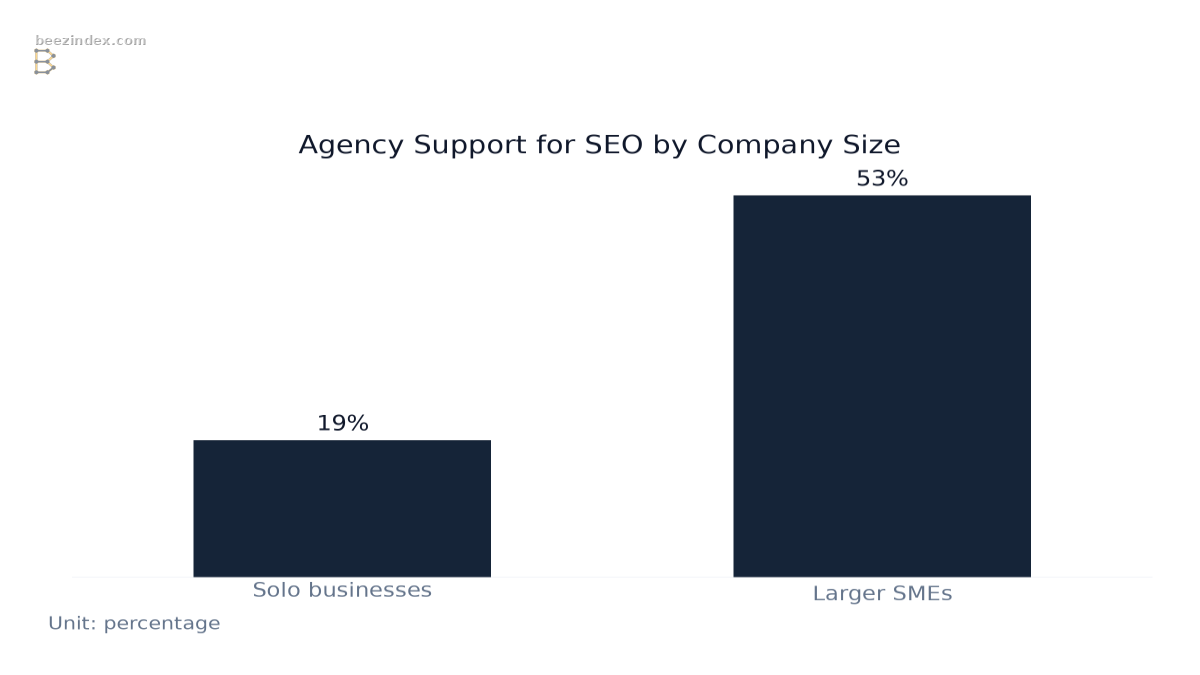
Agency support for SEO increases significantly with company size from 19% for solo businesses to 53% for larger SMEs.[1] Smaller firms usually manage design and search marketing internally until operational demands overwhelm their staff. Unassisted solo firms often miss critical technical updates, which causes traffic losses and low conversion figures over time.
Public web records reveal these performance problems without intrusive testing or unauthorized database queries. Fast scanners read response headers, SSL certificate expiry dates, and viewport meta tags across millions of registered company domains. These observable signals show whether a company actively maintains its digital assets or needs commercial design support.
Agency Support for SEO by Company Size
Technographic Data as a Prospecting Foundation
Technographic data reveals the underlying software framework of any public commercial website. Automated scanners crawl frontend script tags and network requests to identify specific ecommerce engines, analytics packages, and content management systems. Web agencies use these technical fingerprints to eliminate businesses on locked enterprise contracts and focus entirely on flexible prospects. Advanced script analysis detects deprecated libraries quickly.
Outdated ecommerce platforms present clear operational risks for active online retailers across Britain. The UK market contains approximately 1.1 million ecommerce sites, but thousands still run on legacy monolithic platforms. These older stores suffer from slow load times, checkout errors, and high maintenance costs that depress annual online revenue. Modern merchants require seamless infrastructure updates.
Measuring Common Website Performance Challenges
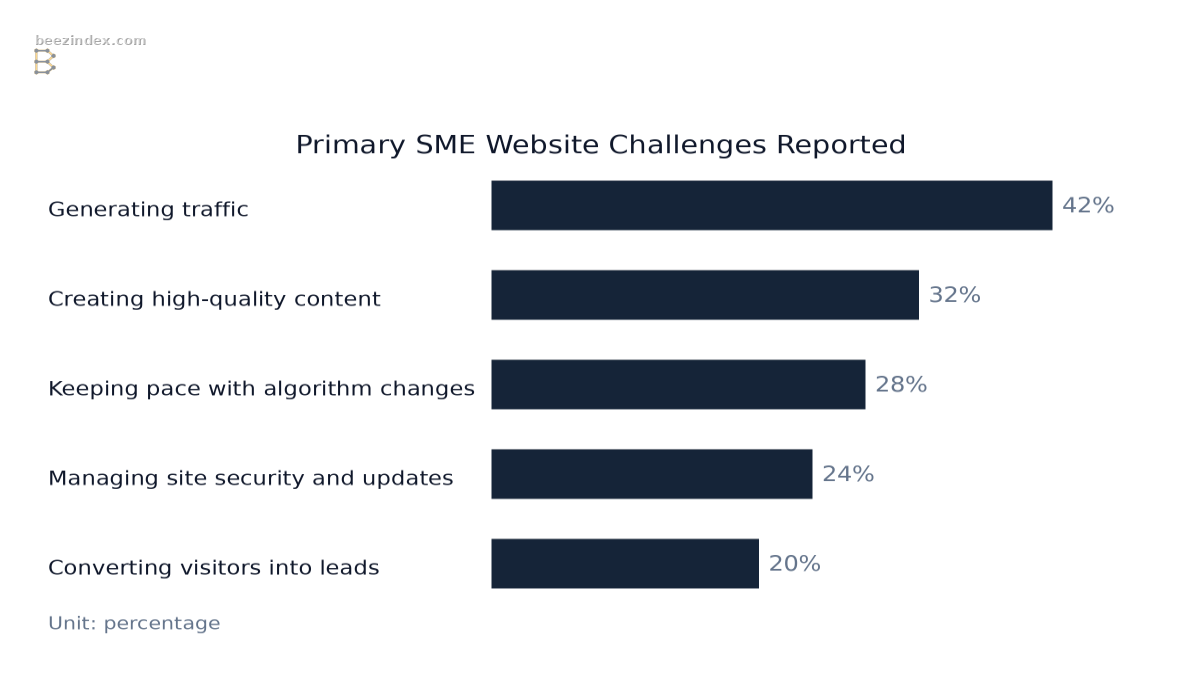
British enterprises encounter recurring operational hurdles that degrade their commercial performance online. Research documents that the most significant challenges reported are generating traffic: 42%; creating high-quality content: 32%; keeping pace with algorithm changes: 28%.[1] Web agencies use these known operational bottlenecks to introduce redesign projects that solve real commercial problems rather than selling cosmetic visual changes.
Marketing leaders improve uk company segmentation by pairing these reported industry challenges with frontend technical audits. Agencies inspect bounce probability, which increases by 90% as page load times rise from one to five seconds.[2] Slow mobile rendering directly harms lead generation because desktop conversion rates currently outperform mobile by a 2:1 ratio.
Primary SME Website Challenges Reported
Filtering by Technology and Hiring Signals
Agency business development teams combine technology filters with active hiring signals to detect expansion. A business advertising for marketing managers or sales heads usually invests capital into revenue channels. Outbound teams review recruitment listings on LinkedIn alongside technical audits to confirm project funding.
Stale frontend designs paired with aggressive commercial hiring indicate a company ready for repositioning. Companies frequently modernise their brand identity immediately before launching new service lines or opening regional offices. Identifying these recruitment signals helps agencies contact decision-makers before competitors spot the public tenders.
Technical audits also identify missing marketing automation and broken analytical setups across corporate domains. An enterprise spending money on paid advertisements without active conversion tracking wastes substantial marketing budget. Highlighting these structural gaps gives agency consultants a factual baseline for exploratory strategy calls.
Ensuring Data Privacy and Compliance
Outbound prospecting across the United Kingdom requires strict adherence to corporate governance standards. Sales teams must comply with PECR rules and UK GDPR requirements when sourcing commercial email addresses. Compliance teams verify active hubspot installations and legitimate consent mechanisms across public portals before sending targeted marketing messages.
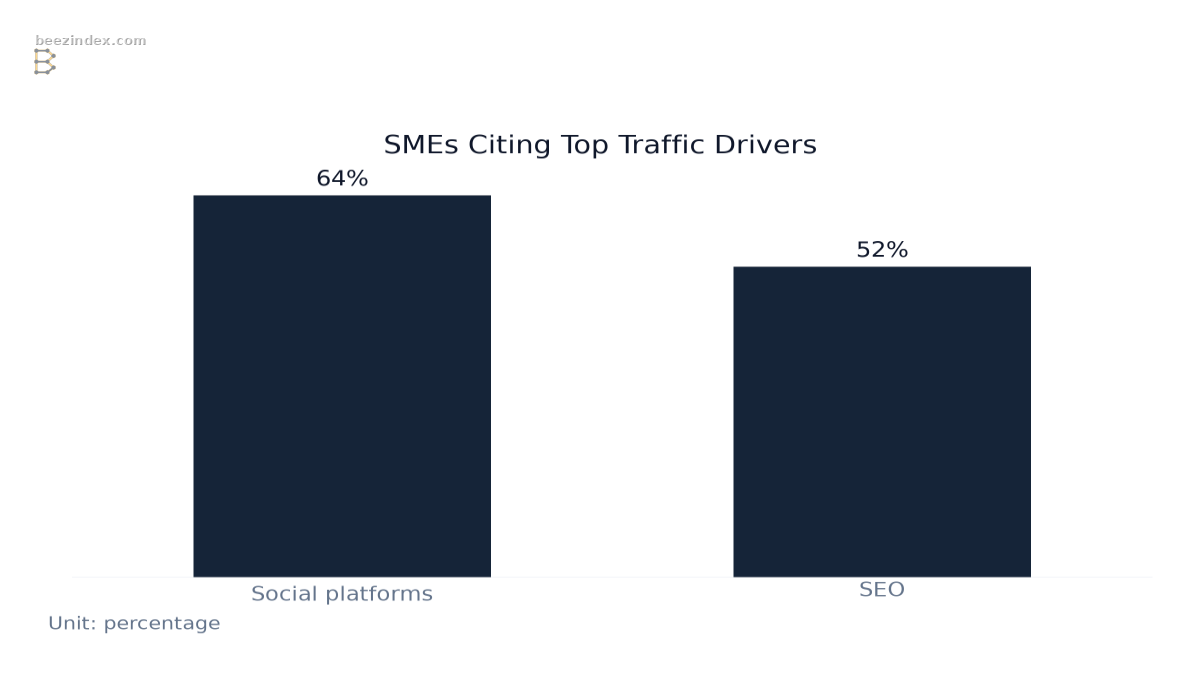
Audits show that 64% of SMEs cite social platforms as a top traffic driver compared to 52% for SEO.[1] Businesses focusing heavily on social channels often neglect their underlying tracking compliance and cookie banners. Prospecting teams identify these technical deficits to present compliant redesign solutions that protect business owners from regulatory fines.
SMEs Citing Top Traffic Drivers
Identifying Modern Lead Signals with BeezIndex
Modern lead discovery requires structured intelligence rather than manual web searches across company registries. BeezIndex converts fragmented public website and company information into structured business intelligence for UK commercial agencies. Agency teams use the business-level intelligence layer to filter companies by hosting provider, frontend framework, and geographic region.
Sales teams start with a free search to explore live company profiles and evaluate market fit. BeezIndex prioritises matching confidence by linking Companies House records with verified company-to-website intelligence. Users then upgrade their subscription tier to activate persistent market monitoring and export enriched lead lists into CRM workflows.
Tracking Industry Shifts for Prospecting
Strategic market researchers track structural company shifts across corporate registries to forecast commercial design projects. Roughly 55% of SMEs without a website plan to launch a site within the next two years.[1] Sales professionals focus on firms without functional company websites to pitch foundation packages before these expanding businesses engage full-service creative partners.
Roughly 94% of website owners consider their site important to daily operations.[1] Furthermore, 69% of businesses rely on their websites for lead generation, and 70% process sales directly through their online stores. Agencies track confirmation statements, balance sheets, and ownership changes to approach expanding enterprises at the exact moment capital becomes available.
What to Remember
Finding prospective web design clients requires observable evidence rather than blind cold outreach across outdated corporate registers. Over 1.1 million UK ecommerce websites compete for customer attention, yet thousands struggle with slow load speeds and poor conversion rates. Agencies generate higher response rates when they highlight concrete technical bottlenecks like mobile responsiveness, broken scripts, or missing structured schema.
Your business development team should establish an Ideal Customer Profile combining firmographic size with observable technographic signals. Review public code, check hiring boards for marketing roles, and verify compliance with UK GDPR and PECR regulations before sending outreach. Begin your next prospecting sprint by auditing regional companies on outdated platforms to pitch value-driven website modernisation projects.
Frequently Asked Questions
How do web agencies check if a UK business needs a website redesign?
Agencies inspect observable technical factors such as page load speed, mobile responsiveness, and outdated CMS versions. They also review whether the business displays missing SSL certificates, legacy code frameworks, or broken layouts. These public indicators highlight operational inefficiencies without requiring internal company access.
What regulations apply to B2B outbound prospecting in the United Kingdom?
Agencies must follow UK GDPR rules and the Privacy and Electronic Communications Regulations (PECR). Outreach teams must establish a legitimate interest lawful basis and provide clear opt-out mechanisms in all marketing emails. Contacting corporate entities such as limited companies carries different consent rules than contacting sole traders.
Why is technographic data better than basic registry data for lead generation?
Standard corporate registers only provide statutory information like incorporation dates and filing addresses. Technographic data reveals the active software stack, payment gateways, and analytics tools deployed on a domain. This technical context allows web agencies to pitch specific platform upgrades that solve measurable commercial problems.
Explore verified UK business data, filter prospects by website technology stack, and identify active companies needing web development services.
Start Your Free Company Search Today